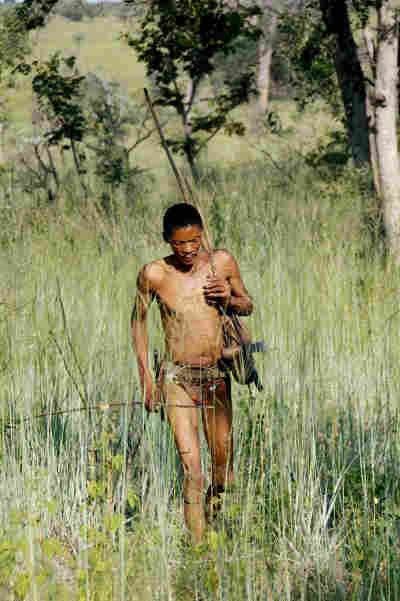
Newsletter #3 – The Redhouse Skeleton!

Several years ago, a surprising discovery shocked residents—the mysterious Redhouse skeleton was uncovered during trench digging along a busy street in Redhouse.

The excavation of the Redhouse Skeleton

Soon afterwards, their digger reached the electrical sub-station. At that moment, the bucket tore into the soil and exposed a seated skeleton with a round hole in its temple.

Immediately, the police arrived and declared a crime scene. Nevertheless, common sense soon prevailed because no villager would bury a victim beside such a busy road, even at night.

How old was the skeleton?

It would have been fascinating to determine the Redhouse skeleton’s age. After all, the railway line through Redhouse opened in 1875, and the famous Red House likely existed by 1850. Furthermore, growing activity followed the arrival of the 1820 settlers, by which time few Khoi clans remained intact.

The hole in the skull suggested a gunshot wound.

Therefore, we asked the police for forensic testing to date the bones. Interestingly, the Khoisan—formerly called Hottentots and Bushmen—sometimes buried their dead in a seated posture.

However, by March 2025 the SAPS Forensic Science Laboratory faced a backlog exceeding 140,000 cases. Consequently, I do not expect results soon.

So, what might have happened to this Redhouse skeleton?

Was he a war victim?

Redhouse skeleton

During the Third Frontier War, Khoi and Xhosa forces attacked the Star Fort near the Papenkuils River. They captured livestock and retreated toward present-day Kleinskool. Afterwards, they settled down to a celebratory braai, probably enjoying Karri, a fermented honey drink.

Meanwhile, the dragoons recovered their horses and followed the raiders’ trail. Eventually, they reached the braai, joined the gathering uninvited, and killed about forty people. Perhaps our skeleton was one of those casualties.

Alternatively, he may have been killed by passing sailors many years earlier. This Redhouse skeleton raised fascinating questions about the area’s early history.

Ultimately, we will probably never know.

Christmas shopping now looms. Therefore, consider buying a signed copy of The Boys from Umgazana for your favourite aunt. Each copy costs R325, plus courier charges when needed. Email me at frank@frankcollierauthor.com if you would like one!

You will find more information at https://frankcollierauthor.com/ or

https://jackandtemba.org/

For more stories about the Village of Redhouse, visit my Redhouse History page.

Chronicles of Redhouse Release!

Hey Redhouse connections! The Chronicles of Redhouse are now available in one booklet!

We hope this not so serious look at the history of the Village makes it onto your Christmas present list!

R195 each, all proceeds to the Village Hall Fund to keep the Grand Old Lady in good shape.

Please place your orders with Pam Moore via email at moorepam9@gmail.com or phone her on 0838007097.

For out of town orders, courier charges will be for your account.

Redhouse Institutions

Wrapping up this series on the fantastical history of Redhouse, once known as the “Home of Jolly Bachelors”, we discuss the astonishing number of institutions which have played their part in the history of the Village, some long departed, others still going strong.

I should state that the reason for this series on the history of the Village is to record at least an outline of what transpired in this magic place. As the poet said, “The old order changeth, yielding place to new”. Generations come and go, and much knowledge is lost.

For future (and more serious) students of Village history, you need to know that the Redhouse Library is the repository of most of the records of the clubs and societies mentioned below. I am sure that diligent research in the dusty archives would reveal much new information to fill out these brief notes.

Curious readers may have wondered why this series has not concentrated on actual people of the Village, with very few exceptions. That’s because true history is sometimes best told as fiction, to avoid legal costs!

We start with sporting codes first.

Badminton

I have no idea when badminton began or ended or if it was run as a formal club. I do have very vague memories of games being played in the Village Hall. It was certainly going strong in the late 1940s and probably lasted into the 1960s.

The trophies for the modern Boxing Day Triathlon consist of the ancient and battered Badminton Cup minus one handle (First Prize) and the other handle (Second Prize).

Bowls

The Bowling Green was donated to the ZRC by Bill Oddy in 1953, which implies that it must have been in existence before that. In fact, close scrutiny of a photograph taking from the air in 1920 (I imagine the intrepid photographer leaning out of the back seat of a WW I Sopwith Camel biplane, hanging on to his heavy old-style camera for dear life) shows clear existence of what looks like a green in the correct position.

In the 1980s bowls became very popular and the ZRC Bowling Section joined the various local and national associations in 1984. To do this, they had to have 17 members. With time running out to get the application in, the late Gulla Reynolds approached members in the bar to please join up. I put my name down on condition that if I ever grew old enough to join the ”white ants” I would be allowed to play in Club colours, i.e. pink. Hasn’t happened yet!

The bowls section was renamed the Redhouse Bowls Club in 1997 and disbanded 2019, but social bowls remains.

Boxing Day Triathlon

This is a fairly recent tradition, started about 2008. It involves teams supposedly made up of at least two generations of the same family. The event takes place at the RYC and involves a swim across the River and back, whereupon the cyclists race two laps round the Village on the near side of the railway line, followed by runners who complete the event. Some surprisingly good times have been recorded.

Coffee and buns for competitors and spectators complete the morning and Christmas Dinner is well and truly settled.

Golf

The Redhouse Golf Club was founded in 1905. Emil Lippstreu laid out the course, which had greens of Kimberley Blue, a black grit. The course was looked after for most of its existence by George Goba, aided by his wife Maggie and his children, who acted as caddies in addition to looking after the family’s horses and cattle.

George grew up on my Grandfather’s farm, part of which is now the Wedgewood Gold Course. He ran the RGC, made the tea, took the green fees, checked the score cards and provided advice on how to negotiate the course.

Plenty of Village golfers learned to play on the old course and remember it fondly to this day.

In the 1970s the implementation of the Apartheid Group Areas Act meant that George had to move away. In addition, golfers were increasingly attracted to more modern courses in Port Elizabeth.

Salt pans were developed alongside the course and salt seepage put paid to the mushrooms which had been a feature well loved by the “owners” of jealously guarded patches. The Club was dissolved in 1978.

Hockey

There are photographs of the Redhouse Hockey Club dated 1905, so presumably it must have been started around that time.

At one stage, the field was situated on what is now a wetland opposite the Perseverance Industrial area. The field that I played on was situated a couple of hundred metres behind the primary school and was accessed from the first lane to the right when you entered the Village.

The field was notorious for its uneven surface which was caused by legions of moles who lived in that area. Eventually we were driven to planting broken glass in a trench around the field, but I don’t think it did any good.

The first clubhouse I remember was a wooden shack. It was replaced in due course by a fine brick structure, with showers, a braai and a bar.

During the 1970s and 80s the RHC fielded four teams and was unique in that it was multi-racial throughout the Apartheid era.

Many are the stories to be told about the good old RHC. One fine day the first team beat Uitenhage 7 goals to 2, which was a famous victory for us. The game started at 11h00. The last team members were carried out of the ZRC at 21h00 that night. It was a great celebration.

I claim to be the first streaker across the RHC field, when that was the fashion, but my achievement was surpassed by a certain Uitenhage player who happened to be under the shower after a hard, hot game when a Redhouse opponent threw a snake into his cubicle, knowing full well that the opposition player was petrified of serpents. With a startling scream he fled across the field stark naked except for soapsuds.

But, along with the collapse of civilization as we knew it, the RHC had folded by 1990, like so many other sports clubs.

Rowing

Rowing erupted onto the River in the 1870s with the formation of no less than four clubs, the Ino, Southern Cross, St Georges and the only survivor, the Zwartkops Rowing Club, formed in 1873.

The first regatta was held on 23rd May 1874, the ZRC resplendent in red, black and blue which preceded the familiar cerise “pinks” which have been the Club colours since at least 1895. In 1875 a regatta was held in honour of Queen Victoria’s birthday and included races for six-oars and four-oars, canoes and yachts, and ended with a “swimming match”!

Twenty-four years later the minutes of the 1898 AGM record a proposal by Mr Carden to sell off the racing boats as they were hardly ever used.

Rowing was dormant until 1973 when the massive celebrations planned for the ZRC Centenary saw a strong revival of the Club’s participation in provincial and national regattas. This burst of energy lasted at least forty years, with a number of male and female club members earning national colours.

The Village is also host to the Nelson Mandela University and Grey High School rowing clubs and of late, the Redhouse RC. The ZRC has recently signed up a group of Grey fathers who will hopefully write yet another chapter in the Club’s rowing saga.

Swimming

The Redhouse Swimming Club was founded in 1896, although I have a photograph of a large number of gents standing and seated in front of what must have been the first swimming club building, right on the riverbank, in 1895.

There are later pictures of the swimming jetty with a high diving board. The original wooden structure was replaced after WW II with brick changing rooms. Very convenient trysting hideout in the dead of the night for the young bloods.

The RSC won the inaugural River Mile race in 1924. Roy Gregory became the first River Mile Champion. 48 swimmers entered the race. Over the years, RSC won the event fourteen times.

Eventually, the event became commercialised and in 2010 was moved to the Sundays River due to perceived water quality issues.

For a short while in the 1970s if I remember correctly, there was an Enduro Race, swum from the River mouth to Redhouse, a distance of about seven kilometres.

Tennis

Tennis started in about 1918 when the Redhouse Tennis and Croquet Club was formed. All early minutes were lost when the house on the Henley property burnt down.

The Club boasted three gravel courts and a croquet court and a small clubhouse. Croquet had died out by 1930 but tennis was strongly supported. The courts were made “all-weather” and a fourth one built on the site of the croquet court during the 1960s. The aerial picture of the Village taken in 1920 shows cleared squares of land in the correct position.

The tennis fraternity had their own “Tennis Bar” at the ZRC where they gathered after the action on a Saturday afternoon, and very festive it was.

Yachting

The Redhouse Yacht Club has a long and interesting history which needs its own book. A brief precis follows.

The club was founded in 1904. A major celebration took place in 2004, capping a century of keen racing in a wide variety of craft ranging from forty-foot scows to small single-handed boats designed for children. As the area is well-known for strong winds, involuntary swimming is part of the sport.

Racing in the modern era is a lot less competitive than in the olden days, when the rules allowed a degree of mayhem that would instantly earn a red card in a rugby game today.

Many are the tales to be told of the countless races sailed since 1904. In these gentle days, gales are avoided. Not so in the past. The image remains in my mind of a Laser, running back from the Islands before a south-westerly buster, “pitchpoling” – the bow was driven under and she somersaulted. Crazy stuff!

Protest meetings were a regular feature. These are a form of court martial, run according to a strict procedure, where both sides get to tell their version of the incident under protest. I have witnessed many such trials and have always been amazed at how elusive truth can be.

The Clubhouse is situated in the floodplain so is invaded by the River and inundated with mud on a regular basis.  Work parties then have the joyous task of cleaning up.

One member who invariably swims when the floods come is “Mrs. Murphy”, the figurehead of a long-lost sailing ship. She moved from Veeplaas to the RYC in 1931 and has her make-up done on a regular basis.

In the big 1944 flood she was seen moving downstream in an upright and most stately manner (she has a heavy base, a feature shared by a lot of elderly women). In due course she was returned, muddy but unharmed, by railway truck.

In 1930 the wheelhouse of the tug “Ulundi” was set up on the end of the long-lost RYC jetty. The guns and the Ulundi’s bell (now on the Bridge) were housed there. Years later the jetty was removed, and the wheelhouse was carried upstream and set up opposite about where “A” buoy is moored, as an additional starting line. Eventually a flood carried it away. All that remains is the bell.

The RYC carries on sailing, long may it continue to do so.

Now we look at non-sporting activities.

Benevolent Society

In 1936 the ladies of the Village became concerned about the plight of the children who lived in the nearby township of Veeplaas. They collected 10 pence a month from each of the approximately 100 houses in the Village to buy milk and oranges for the kids. The “Benev” held its first committee in 1938 and carries on the good work to this day, although it is running very low on volunteers.

Carols by Candlelight

About mid-December, Christmas Carols are sung by a large group of people who move up the Towpath disturbing the dogs and ensuring that the numerous wicked in that part of the world are reminded that Christmas is coming and that they had better reform.

In the olden days, Carols were sung on Christmas Eve behind the Yacht Club. We had some very talented musicians and singers in the Village. The show was put together by Mrs Thelma Kohler. Good King Wenceslas was sung by Mrs Eily Murray and Mr George Jones, singing alternate verses, one falsetto, the other deep baritone, to the amusement of many naughty boys who, when they weren’t sticking their candles in some innocent’s ear, would do their best to mimic the singers.

One year, it rained. The Carol service was brought inside the Yacht Club building. The musicians were seated facing the River, and the congregation sat on rows of benches facing them.

Being Christmas Eve, many of us had watched Father Christmas come down the River and had thereafter observed the tradition of having one or two or eleventy toots at the ZRC bar. On this occasion, the Village Priest had joined us. He was a young bachelor, and very popular with his gentle congregation at St Nicholas, but was not well acquainted with the sailors who felt more at home on boats than pews.

The evil dogs plied him with liquor. Eventually he was escorted to the Yacht Club, where the Carol service was about to begin. Mrs Kohler thereupon summonsed the priest to say a prayer.

Well, he fell over several pews on the way to the front, then turned and faced the crowd and delivered the most slurred prayer ever heard. The old ladies of the Village were not amused. It wasn’t long before he was posted elsewhere. Fortunately, God relented, and we got him back again.

Cemetery

The graveyard must have been established after 1920 as there is no sign of it in the aerial photograph of that date. The first burial (north-west corner) was that of Mrs Munday, who ran a boarding house way back when at number 54 Towpath, the large house next to the ZRC.

Mrs Munday was succeeded by the indomitable Minnie Hutton, who has the lane next to the house named after her.

The cemetery covers a large enough area to have taken care of the Village for the next several millennia, but unfortunately the township funeral parlours discovered it and in no time at all it was filled up.

There were incidents of Satanists allegedly digging up corpses and headstones being pinched for rework by enterprising stonemasons, but nowadays it’s a deadly hush, excuse the pun.

Church

The Zwartkops Valley Land Company granted a site for the erection of a church on the west side of the Hall in 1939. World War II interrupted fundraising and building only started in 1952, the first service at St Nicholas being held on June 7th of the following year. The patron saint of children and of sailors, St Nicholas was an appropriate choice for a village with plenty of both!

I do recall the Bishop coming out from town to christen a batch of infants. Old Purple Pants had a lot to say about the young fathers who barely managed to crawl out of the River to attend the event. There was no noticeable increase in the congregation after that.

Father Christmas up the River

Each year since 1928 (perhaps even earlier) Father Christmas travels up-river by boat on Christmas Eve, with fairies to help him carry an enormous red bag full of presents for children of ten years and younger.

People come from far and wide to see the excitement as Father Christmas arrives blowing his horn and waving his ancient stick, while the fairies on board ring the bell. The children sing Jingle Bells and blow kisses to the fairies.

The remarkable thing is that the original Father Christmas, Alec Sharwood, was succeeded by his son John, so we have only had two in over 90 years.

In recent years, the landing place has been in front of the Yacht Club, but in the past he used to disembark at a jetty situated on the Village Green. Legend has it that one year some wicked people soaped the steps of the jetty, and Father Christmas slipped and fell on his guava in the River. I can well believe it.

Father Christmas departs to the sound of his horn and the ringing of the bell and the traditional trek to the ZRC bar takes place.

Floods

Floods are an irregular feature of Village life. There is a photograph from 1928 showing the Yacht Club well under water. Another happened in 1934 and a big one in 1944. I am sure there were others in between.

Within my memory, 1971 and 1983 were big floods, but on August 3rd, 2006 we suffered the mother of them all. Ten houses flooded on the Towpath. Carden Street became a parallel river, with people towing boats along the road filled with their belongings. I rescued folk from my house and pulled them in my blue boat Mr Bean to the railway line so they could escape to safety. The RYC sustained R350 000 in damages.

We last had a “normal” flood in 2011, followed by a minor visitation a year later which brought down the old retaining wall next to Toft’s Corner. I suspect that when the current drought breaks, we could have fun and games!

Hotel

I don’t know when the Sanatorium was built but it seems to have been in position when the 1920 aerial photograph was taken. The hotel was known as the “Sanny” and by all accounts was a popular establishment. Many ex-servicemen returning from WW II stayed there. And it was just a one-minute walk to the ZRC bar!

I have the menu for Christmas Dinner 1948. Whoever was there must have enjoyed the numerous courses available.

Library

The Redhouse Library started as a private book club run from the home of Mrs Bonnie Grylls,  situated on the Henley Property to the south of the ZRC. It burnt down in 1950. 600 books were lost.

The library then moved to the room attached to the Hall and was run from there until it moved to the old Valeyden shop in March 1968 when it became part of the PEM Library service.

In 1999 the PEM attempted to close down the Library, but the Village took it over, keeping half the books. Many more have been added since through donations from within the Village and without.  Mrs Rhona Clark and her band of volunteer librarians run the show.  They have been known to have wine on the premises, which I think should be encouraged as an aid to good literature.

Lippstreu Gardens

Mrs T V Paterson, a keen botanist who lived at 6 Deare Street, built in 1902, collected flora from the kloofs near Veeplaas and Bethelsdorp and laid out a garden in the remains of an old quarry where a dirt road led through two gates to a donkey camp. This is said to be where the original Red House stood.

She died in 1936 and the Lippstreu family took over and continued the good work. Eventually, the Park was taken over by the municipality, who contract out the work. I am not sure Mrs Paterson or the Lippstreus would approve.

Playschool

The Playschool was founded in about 1954 by the mothers of the Village and a building was erected within which generations of Village brats were introduced to education by a series of dedicated teachers.

Eventually the Village ran out of sufficient little children to keep the playschool going and it was taken over by the Primary School.

Post Office

When the telephone system was first introduced it ran on the old “party line” system. Our number was Redhouse 26. You would recognise your own ringtone. There was no privacy on the line. Mr Nicholls operated the exchange at the old Post Office in the ZRC flat on Stewart Avenue. He would know exactly where everyone was. It was a boon for gossipmongers.

The system was first introduced in the USA in 1878. A century later, modern technology began to take over but there are still 5000 subscribers in the remote parts of the States. In Australia, where distances are vast, they couldn’t always afford to put up telephone lines stretching across the endless Outback, so they sent the signal down conveniently placed barbed-wire fencing!

Railway Station and Bridge

In 1875, the railway line from Port Elizabeth to Uitenhage reached Redhouse. There is an ancient photograph of a steam engine straight out of a Wild West movie to prove the point.

As a small boy I was absolutely fascinated by the steam engines. I used to hang about the station as a four- year old, as we lived just opposite at 24 Deare Street. On the platform, the ancient gardener was boiling water for his afternoon tea in a tin can over a fire. I managed to knock this over, and the boiling water landed on my left foot.

The station master came running to see what the noise was about and poured blue ink over the burn. My foot was nursed back to health by Mrs Bleksley, a nursing sister who lived in Redhouse Road. Her brother-in-law was the famous Arthur Bleksley of “three Wise Men” fame for those who remember Springbok Radio.

Everybody caught the train to work and to school in those days, and as schoolboys we had much fun. These adventures need a blog of their own.

In 1947 the Blue Train steamed slowly through Redhouse so we could all wave at the Royal Family en route to Port Elizabeth. Fifty-two years later, we stood in Park Drive to watch the Queen drive by.

I don’t quite know when the Bridge over the railway line was built. It may have come about because a train took out poor, deaf old Mr Deare on his way to the Club.

Nowadays, we have the Great Train Race, where runners and cyclists race the train from Port Elizabeth to Uitenhage. It stops to take a breath at Redhouse for about 15 minutes and the passengers rush out to buy coffee and buns, while looking vainly for a place to pee. All the while the Pipe Band plays stirring tunes to stimulate the bladder.

Redhouse Improvement Klub

In 2011, the Ladies of the Village initiated a soiree at which the hostess for the evening collects the fee paid by each attendee. This gathering takes place on the second Thursday of each month.

The Gentlemen of the Village were not slow to respond to this opportunity. RIK was formed. The meetings are decidedly social events. Fees are invested and occasionally spent on useful projects to enhance the appearance of the Village. Members take turns as Quartermaster, supplying eats as blotting paper is essential at these gatherings.

The only downside is that Friday mornings are low on productivity.

Redhouse Primary School

As early as 1909 the school had 23 pupils from Sub A to Standard 7 (Grade 1 to Grade 9 in modern parlance). Miss Sadie McAdam was the principal and school was held in the Village Hall. In 1953 it moved temporarily to the Yacht Club while repairs were done to the Hall.

In those days, pupils came from Veeplaas as well as the Village.

Miss van Loggenberg was my teacher. She came in from Uitenhage by train. She was decidedly old school.  I remember her telling us that mankind would never travel to the Moon because it wasn’t God’s will.

The new building at the end of De Kock Street was first occupied in 1959 – I was one of four standard 5 pupils. There were really just a handful of us. Now the school has hundreds of pupils, mainly drawn from the Motherwell township.

Redhouse Ratepayers Association

The origins of the RRA are shrouded in the mists of time, when Redhouse fell within the jurisdiction of the Divisional Council.

In the 1960s the Village was incorporated in Port Elizabeth. Its dealings with the local authority have become more difficult over time as the present-day Nelson Mandela Municipality is a political shambles. Basic services keep going, but the general vacuum created by municipal paralysis will result in the RRA taking on more local governance. Which is a good thing. Why should citizens not run their own affairs wherever possible?

The Committee includes representatives from each quadrant of the Village, and it has a structure incorporating infrastructure, communications, security and planning.

And at least once a year the age-old tradition of debating what to do about the dreadful plague of egrets is upheld. These birds are a curse laid upon the Village by long-lost Khoisan witchdoctors, and I have no doubt they will be with us forever.

Redhouse Women’s Association

In 1904, the splendidly named Redhouse Women’s Vigilance Committee was established. It conjures up images of stern women standing at the back door of the ZRC waiting to drag their insensate husbands home.

In the 1970s they gave up that particular battle and renamed themselves the Redhouse Women’s Association. Read all about them under Village Hall.

Security patrols

Security duty has been a way of life since as long as I can remember. The vast majority of patrols were without incident but every so often we had some fun.

There was a time in the late 1960s when a determined burglar broke into the primary school on a regular basis. An ambush was set up one night in the line of pine trees on the school border. There a posse lay in wait for our friend to pitch up, which he duly did. The plan was to let him break into the building, then apprehend him.

At the critical moment, the guard commander and his 2IC, who had been enjoying a party at the ZRC, arrived noisily in their large Mercedes to check on the posse.

The burglar took to his heels through the bundu, pursued by a fusillade of bullets from a variety of firearms including my Army rifle. We never found the body.

At one time we had daylight security, provided by a series of dubious characters. One-legged Nick caught a very long cobra and stuck it in his bag while chatting away a little carelessly. The cobra bit his thumb.

Nick arrived at the hospital and was booked in. Of course, they don’t like firearms, so he was relieved of that, which took some filling in of forms. The patient was by now beginning to feel the effect of the venom, and they were about to rush him into the theatre when they noticed his bag and enquired about its contents. You can imagine the pandemonium when the irate cobra was revealed!

Septic tanks

I have always imagined that septic tanks were in operation from the time of the first houses being built. But it is only in the 1950s that they became a regular feature. Before that, a coloured gent called Roman operated the bucket system. He would collect them in his donkey cart. Where he deposited the contents remains a mystery.

Shops

We don’t have shops in the Village, for security reasons. But once upon a time we had three! The old hotel’s last gasp was a short-lived shop, there was for a time one at 14 Deare Street, but the original shop, run by the Valayden family from Veeplaas, was situated in the current library building.

I well remember being sent off to Sunday School as a small boy, clutching my “tickey” for collection. The temptation of a glass bottle of ice-cold Coca-Cola from Valayden’s fridge proved too much for me! A tickey was the equivalent of two and a half cents!

Village Hall

The wood and corrugated iron Hall was opened in 1911. The structure included a stage because Mr JC Carden had a keen interest in amateur theatricals.  The younger people insisted on a well-sprung floor for dancing. The building was lit by acetylene gas from a plant housed in a shed behind the Hall. In later years, an old crone called Witchy lived there. 

In 1912 the kitchen was added and after that came the veranda. In 1946 a flush toilet was built for the ladies which meant they didn’t have to bring their personal chamber pots to events.

In 1918 the Spanish Flu struck and two nursing sisters, Sarah Toft and a Mrs Arnold, set up a hospital in the Hall. They didn’t lose a single patient, no doubt due to the daily ration of champagne.

The magnificent doors to the Hall were donated by Mrs Toft in 1937. They originally came from the Royal Exchange in London, via the Standard Bank building in Port Elizabeth.

Ten years earlier, a pair of teak gates was erected as a memorial to the JO Paterson family who had come to live in Redhouse in 1902.

The Hall has been a Sunday school, a church and a chapel-of-rest prior to burial. It housed the Redhouse Primary School at one time and the Badminton Club. Dances, concerts, wedding receptions and adult education classes have all taken place within its precincts.

The building has a Conservation-worthy certificate and a citation from the Simon van der Stel Foundation.

I have many happy memories of happenings in the Hall. On one occasion, a Roman Orgy was held, and you had to go dressed accordingly. My outfit consisted of a helmet (the plastic insert from my Army “staaldak”) decorated with palm fronds secured with glue, somebody’s ballet tutu, and a Victorian cavalry sabre.

Entrance was via a colonnade of white columns. There were no tables and chairs set out, only mattresses on the floor.   You ate and drank in a prone position. I recall a large fellow flicking my sword into the wooden wall where it stuck quivering, no doubt to the consternation of the lady ghost who resides in the Hall.

I distinctly remember pouring red wine over the head of the fellow lying next to me, possibly to wake him up. Such delightful decadence!

Villager

The Villager is a monthly magazine which was started in 1966 and is still going strong. It was originally printed on an old Gestetner machine. It is a real treasure trove of local information and must form part of the keen student’s research. For many years it was managed by the late Nancy Goddard who had a knack for seeking out newcomers to the Village and ensuring that they were welcomed into the local scene.

Zwartkops Conservancy

The Zwartkops Trust (now Conservancy) was formed in 1968 to protect the River from a host of enemies including national, provincial and local authorities, commerce and industry, and the indigenous population.

Its activities include environmental education, litter picking, pollution spotting, harassing the council and much more. Have a look at www.zwartkopsconservancy.org for the full story.

Currently, the ZC is on a mission to restore water to the former salt pans across the River and to the north of Redhouse. This will bring back the thousands of birds who formally graced these dry and dusty pans, an essential step in the long process of securing international Ramsar Wetland status.

One project will see the freshwater which pours down the evil Motherwell Canal in prodigious volumes diverted from the River into the pans.

The ZC also has plans to build a barge upon which will be housed a large pump and a diesel motor. The barge will be towed to spots convenient for pumping salt water into the pans. The reason for a floating pump is security. The barge be will moored in the Village to protect it from the vandals who destroyed the land-based pumphouse and caused the salt company to cease operations.

It has been suggested that a 30 calibre Browning machine gun is a necessary accessory, good for the removal of gillnetters, hunting dog owners, ANC councillors and other riff-raff surplus to requirements.

Zwartkops Rowing Club

As previously recorded, the ZRC came into existence in 1873, the fourth of four rowing clubs founded around that time at Redhouse. It is the oldest surviving rowing club in South Africa. Without doubt, this ancient establishment needs its own more detailed history.

The club’s first building was a boathouse erected in a hurry to house the brand new four-oar arriving from England at a cost of £67 4s 8d, approximately £7333 or R164738  in today’s money. Which means that a quart of Windhoek Draught would have cost 22 cents in 1873!

The first clubhouse was rented from a member of the original committee, Mr Fred Levick, and was situated somewhere in the vicinity of 36 and 38 Towpath. In 1896 it was uprooted and re-erected in its present position. Several alterations have been carried out on the ancient structure and no doubt more will happen in the future.

Many hilarious tales could be told of Club life. There is a narrow exterior alleyway which runs along the length of the main bar and snooker room. Members frequently placed their beer glasses on the windowsill while playing their shots. On occasion, a teenage hand would appear through the window and stealthily remove a glass, returning it a few seconds later minus a good “sluk”. Eventually this was noticed, and the alarm raised but the miscreants always escaped.

The Centenary celebrations in 1973 involved a huge amount of preparation and the end result was a great success. One of the unplanned events was a gigantic rugby scrum which took place in the main bar, about fifteen members a side. Nobody died, surprisingly, but the carpet tiles were torn up and a piece of one distinguished member’s scalp was pinned to the bar like a Red Indian trophy for ages afterwards.

What’s next?

Well, that is the end of the series! For those who remember poor !Click from Episode One, I regret to say we are still waiting for DNA evidence to determine who was most likely to have killed him!

The entire series will shortly be available in book form, to be sold in aid of the Redhouse Women’s Association to assist the ladies in maintaining the Village Hall in the state to which the Grand Old Lady has become accustomed!

Should you be interested in purchasing a copy or two – think Christmas presents – please email me on frank@fcbs.co.za.

Redhouse and Democracy

Note the politically correct headline. The original was Redhouse and Kleptocracy.

The evil Apartheid regime handed over a country which was functioning pretty well to the benefit mainly of the minority, to the liberation movements which have brought the nation to the brink of “failed state” status for the benefit of a very much smaller minority.

This is not the place to record the decline and fall of South Africa, I don’t have enough terabytes to do the subject justice.

So let’s concentrate on the good times!

Number One! 27th April 1994.     The amazing election during which, for the first time ever, black, brown, yellow and white South Africans took their places in queues of voters peacefully trundling through the voting booths. As a volunteer official in St Agnes Church Hall, Swartkops, it was a moving experience to see the happiness on the faces of people who had never been able to vote before, and to feel the sense of relief that the prophets of doom and bloodshed were proved wrong.

In May that year, Queen Elizabeth II and President Mitterand of France officially opened the Channel Tunnel between England and France, at a cost of 16 Billion Sterling in today’s money, well over budget. Believe it or not, the first plan for such a tunnel was drawn up by a Frenchman in 1802!

Number Two! 24th June 1995.     The Springboks beat the New Zealand 15-12  in the Final of the Rugby World Cup, played at Ellis Park in Johannesburg. A drop goal in extra time by flyhalf Joel Stransky did the trick. For the second time in two years the nation stood united.

In Europe, NATO bombed the Bosnian Serbs back to the negotiating table. Peace gradually broke out.

In 1996 Dolly the sheep became the first successfully cloned mammal, the Taliban took over Afghanistan, and Bafana Banana actually won the Africa Cup of Nations! Its been a downhill slide for our football since then.

Now there is a long gap until 2007 during which the ANC denigrated from a liberation movement with international backing into one of the modern world’s most obnoxious packs of plunderers. Their version of governance is well described as “state capture”.

In 1997, Princess Diana of Wales died in a car accident in Paris, and the sound barrier was broken on land.

USA President Bill Clinton was impeached in 1998 and Google was founded. Who could have foreseen that Google would become the go to place to find out just about anything! A famine in North Korea killed an estimated 2.5 million people. The municipality handed over the library to the Village and it has provided a valuable service ever since, thanks to the volunteers who run the show.

The following year the world population hit six billion and the Euro currency was introduced.

The first day of the 21st century and the 3rd millennium was celebrated worldwide on New Year’s Day 2000, even though according to the calendar it was a year early.

In 2001, Wikipedia was launched, the first iPod was introduced and the September 11 attacks on the twin towers in New York horrified the watching world. Less than a month later, the USA and the UK invaded Afghanistan and kicked out the Taliban.

In 2002 Queen Elizabeth celebrated fifty years as monarch of sixteen countries and Brazil won the football world cup.

The USA invaded Iraq to get rid of Saddam Hussein in 2003, starting an eight-year war. Although it doesn’t seem to have stopped yet? The very last VW Beetle came off the production line in Mexico and the Concorde made its last supersonic flight.

On the sporting front, South Africa managed to misread the Duckworth-Lewis method of scoring for shortened games and got bundled out in the group stages of the tournament they hosted. Since then the word “chokers” sticks to the team like poo to a baby’s blanket.

Facebook was born in 2004 and the Redhouse Yacht Club celebrated its Centenary with a major regatta and very enjoyable dinner.

The Boxing Day Tsunami happened in the Indian Ocean, leading to a quarter million deaths. The outgoing tide reversed in the Swartkops River and Port Elizabeth harbour looked like a washing machine in action.

In 2005, YouTube was founded, Hurricane Katrina devastated the Gulf of Mexico and 80 000 died in an earthquake in Kashmir.

Italy won the football world cup in 2006 and Pluto was downgraded from a proper planet to a dwarf planet. You just can’t get away from these rating agencies, can you Cyril?

Number 3! 20th October 2007. The Springboks beat England 15-6 in Paris. For the third time in thirteen years South Africa became one nation, united in pride and happiness.

Elsewhere, the iPhone appeared, and the sub-prime financial crisis engulfed the world.

The following year signalled the start of the Great Recession as stock markets fell dramatically.

In 2009, Bitcoin was introduced, and the world’s tallest skyscraper was completed in Dubai.

Number 4! The 2010 FIFA World Cup was held in South Africa. It was a very happy time and the rugby-mad country loyally supported the games. Let’s forget about the corruption surrounding the event, this is SA. Port Elizabeth scored the best-looking stadium of them all.

Haiti lost 230 000 people in an earthquake, Greece defaulted on its debts, Ireland endured a financial crisis, and the iPad and Instagram were launched.

2011 was a hectic year. An earthquake devastated Christchurch, New Zealand, the Arab Spring revolts upset North Africa and the Middle East, a 9.0 earthquake off the coast of Japan triggered a killer tsunami and a nuclear power plant meltdown, China’s Danyang–Kunshan Grand Bridge, the world’s longest, opened for traffic, the world population hit seven billion, two very nasty people got their just reward, Osama bin Laden shot dead by US Navy Seals and Muammer Gaddafi dying in a ditch in Libya, all of this topped off by the fairy-tale wedding of Prince William and Catherine Middleton. Whew!

In 2012 the Higgs Boson was discovered. Sorry they lost it in the first place. A mad fellow called Felix Baumgartner jump out of a helium balloon and fell 39km to land safely after breaking the sound barrier. Nutter! Queen Elizabeth II celebrated sixty years on the throne.

The following year, a rock with a mass of about 13000 tons, and 20m in diameter, entered the atmosphere over Russia and exploded with a force thirty times that of the Hiroshima atom bomb. 1500 people were injured by flying glass as windows imploded, many more had to change their underpants.

2014 was not a happy year for the aviation industry. Malaysia Airlines Flight 370 disappeared without trace. The little evidence available points to its final resting place being in the Indian Ocean west of Australia. Air Malaysia also lost Flight 17, shot down over the Ukraine, an Indonesian plane came down in the Java Sea, and an Algerian plane crashed in Mali. On the ground, the evil ISIS movement began its reign of terror in Iraq.

China ended its 25-year “one child per family” policy in 2015. It didn’t make much difference because the cost of living in China doesn’t lend itself to having lots of children. Liquid water was found on Mars, no reports of whisky as yet. Climate change became a major topic of discussion worldwide, but not much meaningful action has resulted.

In 2016, the United Kingdom voted to leave the European Union, sparking the biggest internal uproar since World War II. In an episode which properly belongs in the Mad Magazine, Americans voted in Donald Trump as president of the USA.

Mother Nature began to fight back against mankind in 2017. Hurricanes Harvey, Irma and Maria devastated parts of the USA, Centra America and the Caribbean. Thousands died. Then Mexico was struck by two earthquakes which killed 350 people. ISIS was declared defeated and Mad Bob Mugabe was finally ousted from power in Zimbabwe. The first known interstellar object, named ‘Oumuamua, which means “first distant messenger” in Hawaiian, wandered into the solar system.

In 2018, the first monkeys were cloned, and there were reports of genetically cloned humans in China. I wouldn’t have thought they were short of people. The worst disgrace ever to have been elected to office in South Africa, Jacob Zuma, was forced to resign. Earthquakes and tsunamis caused thousands of deaths in the East. France won the football world cup in Russia.

Number 5! 2nd November 2019. Against all the odds, South Africa beat England 32-12 in probably the greatest victory of the modern era. Led by Siya Kolisi and coached by Rassie Erasmus (both from “Die Baai”), a happy herd of Springboks blew away the Poms, who came away with the prize for total lack of sportsmanship.

China landed a spacecraft on the far side of the Moon in 2019. So we can’t see what the buggers are up to. ISIS lost the last of its territory, but I doubt we have seen the end of them yet. Boris Johnson became Prime Minister of the United Kingdom. During World War II the UK and the USA were led by great men, Churchill and Roosevelt. Now they have Johnson and Trump. How art the mighty fallen!

Then we got to 2020 and the coronavirus struck, and South Africa banned the sale of alcohol!

This has led to the rapid development of many home-built stills producing a wide variety of very drinkable brands. Let’s hope this continues after the ban is lifted.

You will have noticed that I have recorded the population rise from billion to billion as we have gone along. The respected Lancet journal very recently announced its projections for population growth for the rest of this century. What they have to say does not make happy reading for the “old” world.

They estimate that the world population will peak in 2064 at around 9.7 billion, and then decline to about 8.8 billion by 2100, by which time fertility rates in 183 of 195 countries will not be high enough to maintain current populations.

Populations are predicted to decline dramatically in many countries. For example, Portugal will drop from 11 million to 5 million. At the other end of the scale, China will drop from 1.4 billion to 732 million in 2100.

Bucking the global trend, sub-Saharan Africa’s population will triple from an estimated 1.03 billion in 2017 to 3.07 billion in 2100. North Africa and the Middle East is the only other region predicted to have a larger population in 2100 (978 million) than in 2017 (600 million).

So just under half the world’s population will inhabit Africa and the Middle East.

To quote “The 21st century will see a revolution in the story of our human civilisation. Africa and the Arab World will shape our future, while Europe and Asia will recede in their influence. By the end of the century, the world will be multipolar, with India, Nigeria, China, and the US the dominant powers. This will truly be a new world, one we should be preparing for today.”

The logical conclusion is that the Old World (Europe) will be forced to open its gates to the African and Middle Eastern hordes, because it won’t have the labour to keep the wheels turning.

The civilization which evolved in Europe over many centuries will face its sternest challenge yet.

To be blunt, Africa and the Middle East are not exactly models of progressive and effective civilization. Anybody read Gibbon’s “Decline and Fall of the Roman Empire”?    

What of Redhouse during the post-apartheid period?

The truth is that the Village which came into existence as a sporting venue a hundred and fifty years ago, and evolved into one of those “last outposts of the British Empire”, during which time it developed a unique way of life remembered with great affection by so many people around the world, has long been in retreat from those halcyon days.

It remains the ideal place to bring up children and dogs. It does its best to maintain it numerous traditions. But the number of its guardians gets smaller every year. Newcomers to the Village are not necessarily interested in its history or getting involved in maintaining its structures.

Entire generations of Village children have moved out of the country. Redhouse in its present state gives us a glimpse of the future of Europe. I guess traditions are only kept going if they resonate with the majority of the population.

However, nostalgia for a bygone age is quickly laid aside when we contemplate the concept of “tipping points”, those relatively sudden events which call us out of the “noiseless tenor of our way”.

The coronavirus is one such tipping point. It came as a shock to most people, but if you know anything about the past you will realise that it is just one of numerous plagues the human race has endured throughout recorded history and almost certainly before that. And it was predicted by a number of scenario planners and medical experts. It will pass.

Much scarier is climate change.

Mother Nature is getting angry!

In 1950, carbon dioxide in the atmosphere breached 300 parts per million for the first time in 800 000 years. Seventy years later, we are very close to 420ppm.

The more CO² in the atmosphere, the more the Earth warms, the more the ice melts, the more extreme storm events occur, the more droughts extend, the more species go extinct, and so on and so on.

Global sea level rose about 200 millimetres in the 20th century. During the last two decades, the rate has nearly doubled and is accelerating slightly every year.

The human race will react with positive counter measures as best it can. Fresh water will need efficient management. South Africa has a water scarcity problem. The first step in solving this problem is to remove the ANC from power so that people with expertise can be appointed to relevant positions, instead of the corrupt clowns currently in charge.

Finally, a message for the liquor entrepreneurs of the Village, I would like a glass of Bumbo please!

The pirates’ attractive alternative to the Royal Navy Grog, made with 2 parts of dark rum to one part of orange juice,  ½ teaspoon of Grenadine, ¼ teaspoon each of nutmeg and cinnamon! Cheers!

Redhouse and the Republic

1960 was not the happiest year in SA. In January, riots in Durban killed a number of policemen. In February, rebellion against the government erupted in Pondoland, and in March the infamous Sharpeville Massacre took place. British Prime Minister Harold MacMillan made his memorable “Winds of Change” speech in the South African Parliament. 17 African countries gained independence that year.

On a happier note, the Beatles formed up in Liverpool and the birth control pill became commercially available. The world population was a tad over three billion.

In 1961, the Union morphed into the Republic and left the Commonwealth. This move was much welcomed by most Afrikaners, not so much the by the English-speaking population. The Black population may not have been too happy either, despite having endured one and a half centuries of British rule. I remember my old nanny, tears rolling down her cheeks, saying “They have taken our Queen away”.

Almost immediately, international pressure was exerted. South Africa was banned from the Olympic games. Within the country, apartheid was rigidly enforced, and the black liberation movements responded. Decades of mayhem followed.

Yuri Gargarin  made the first human spaceflight. A Russian dog, Laika, had preceded him by four years.

In 1962, the world teetered on the brink of nuclear war, but President John F Kennedy faced down the Soviets as their fleet loaded with missiles headed towards Cuba, and we all breathed a big sigh of relief. Imagine a similar situation with Donald Trump in charge!

In 1964, Nelson Mandela was sentenced to life imprisonment, the Rhodesian Bush War began, and the author completed school without being expelled.

In 1965 Hendrik Verwoerd was assassinated in Parliament, Sir Winston Churchill died, and yours truly was conscripted into the Army for an interesting nine months. Looking back at the experience, it’s amazing how time effaces pain in favour of fun!

I do recall the suffering involved when I had to “skaapdra” a large  fellow who was a postman in civvy life, up the butts at the shooting range at Hamilton in Bloemfontein. This punishment came about because the staff-sergeant instructing us in radio procedure left the classroom for thirty minutes.

In that time, we logged into the police channel and began reporting burglaries and murders all over. The cop vans went ballistic. But our staff sergeant was wise to us. “Julle is nou weer in die kak!”

Tempe was a not a holiday camp. But the Army does some strange things. Some of us entrained for Cape Town for six weeks of guard duty. We were garrisoned in the Castle, where we were served very decent food on crockery by waiters.  What a change from the normal greasy horrors dumped into your ”varkpan”!

Our job was to guard Wingfield Airfield. At that stage there didn’t appear to be any other army presence in Cape Town, just those nancy boys in white ice-cream outfits who had landed with their bums in the navy butter. So armoured troops guarded an air force base under command of the navy. Weird.

One evening, while off duty in our guardhouse at the airfield, we had attempted to persuade the above-mentioned postman to part with some of his biscuits, but he was not budging. We made a plan.

While my mates kept him talking, I leopard-crawled up behind his bed, the idea being to remove the packet of biscuits from his pack. But I guess postmen have instincts honed by constant confrontation with angry dogs. He sensed my presence and used his large boot to good effect on my head. A brawl ensued. Eventually peace descended, the biscuits were eaten, and we all went to sleep, except the postman who sulked outside in the freezing winter rain, nursing his bleeding face.

I was rudely awoken by a naval petty-officer and after parade in the Castle courtyard the next morning, was brought before the Veldkornet (they had reverted to Dutch East India ranks at that stage). The postman and the corporal of the guard, a middle-aged man of limited intelligence, then laid their charges against me.

Apart from assault, battery, and biscuit theft, I was indicted for deliberately riding the corporal’s bicycle into a wall with resultant damage and of running and jumping on eight army beds until they broke. What saved my bacon was the lugubrious manner in which the two complainants laid their charges. I could see the Veldkornet biting his lip to stop himself laughing. I got off with confinement to barracks.

A year later, the 24-year long Border War started. It ended in 1990 with the approach of democracy for Namibia and South Africa, and the collapse of the Soviet Union. It had evolved from an “anti-terrorist” movement into a proxy war between the West and the Communists.  Over 2 000 South Africans and at least eight times as many Cubans, Angolans and Namibians lost their lives.

By this time, the USA was embroiled in the unpopular Vietnam War. In 1967, the Israelis whacked four Arab countries in the Six Day War even though vastly outnumbered. Dr Christiaan Barnard carried out the world’s first heart transplant.

In 1968 President Kennedy and Martin Luther King were assassinated. I was back in the Army for a three-week camp, on manoeuvres in the Free State. My buddy and I decided to charge a large anthill in our Ferret scout car, a lovely four-ton toy with a six-cylinder Rolls-Royce engine. The anthill won. We ended up with all four wheels off the ground and spent some time wondering how we would explain this problem. Luckily some friendly “tiffies” came by in their engineer’s truck and pulled us off.

The first moon landing took place on July 20, 1969. I remember watching the full moon. The computer processor on board the Apollo spacecraft ran at 0.043 MHz.  A modern Apple cell phone runs at  2490 MHz! Woodstock happened, and Redstock, the Village version, carries on the tradition.

In September, the Tulbagh Earthquake, 6.3 on the Richter Scale, occurred during the night. I distinctly remember waking up as my bed shuddered and thinking to myself that I should perhaps consider spending less time at the Club. But the next morning there was a crack in the opposite wall.

The decade of the ‘60s saw big changes in the Village. Previously run by the Divisional Council, Redhouse became part of the PE Municipality. The cattle grid and old farm gate at the village entrance were removed. Streetlights became a hotly debated topic. The old manual telephone exchange housed in the then functioning post office opposite the station disappeared in the early 1970’s.

In those days, many people from the Village travelled by rail, including  kids going to school in town or Uitenhage. We had a lot of fun on those old trains. Eventually, steam faded from the scene and now we endure diesel locos, with their banshee wail, about as romantic as a mobile brick.

The 1970s was the era of sexual revolution which lead to free and easy attitudes about mankind’s oldest game, but the backlash came at the end of the decade with the rise of AIDS. Feminism continued to fight for women’s rights.

Round about 1970, primary salt pans were established across the River from Redhouse and to the north where the golf course used to be. There was a major outcry about this as residents declared that salt seepage would kill all vegetation. It is true that the Golf Club gave up the ghost in 1978 but that was as much to do with the movement of serious golfers to much more attractive courses in town, and the removal of George Goba and his family from the area by the application of apartheid law. George had looked after the course for ages.

For nearly half a century the pans attracted thousands of birds and created the basis for a future tourism industry in the area. Unfortunately, the advent of democracy in 1994 also ushered in the era of kleptocracy, whereby the ruling party abandons all responsibility for governance in pursuit of looting the state. The pans are now salt deserts, and there are no more flamingos, entirely due to the incompetence of local government.

In 1970, the world population hit 3.7 billion and the Boeing 747 made its maiden flight. Bigger aircraft were needed!

In 1971, the microchip was invented, a significant step in the progress of computerization. In a throwback to the stone age, Ide Amin seized power in Uganda. A murderous nutcase if ever there was one, old Idi demonstrated that democracy has an inherent weakness in that it relies on the popular vote. Most voters make decisions based on emotion rather than logic. The end result is not always a happy ending. Look at the modern USA ,and SA for the last twenty-six years.

The yachting scene at Redhouse was booming. So was the South African economy but not too many could see the long decline that lay ahead.

In August, the River came down in flood.  Alan Scott’s houseboat was moored in the River and he set off his alarm to awaken the Village at 04h00. I had returned the previous night from a six-week stay in Frere Hospital in East London, following an unexpected encounter with a bakery van in the middle of the night while on a  hockey tour. The alarm woke me up.

The water was extremely cold. Numerous large serpents lay washed up on the Towpath, alive but immobile, their cold-blooded metabolisms no match for the conditions.

In 1972, Northern Ireland suffered the Bloody Sunday massacre and the Summer Olympics in Munich were disrupted by the murder of eleven Israelis by a Palestinian terrorist group. A South African Special Forces team carried out a raid on the Tanzanian port of Dar es Salaam using as their base the SAS Emily Hobhouse, a Daphne class submarine.

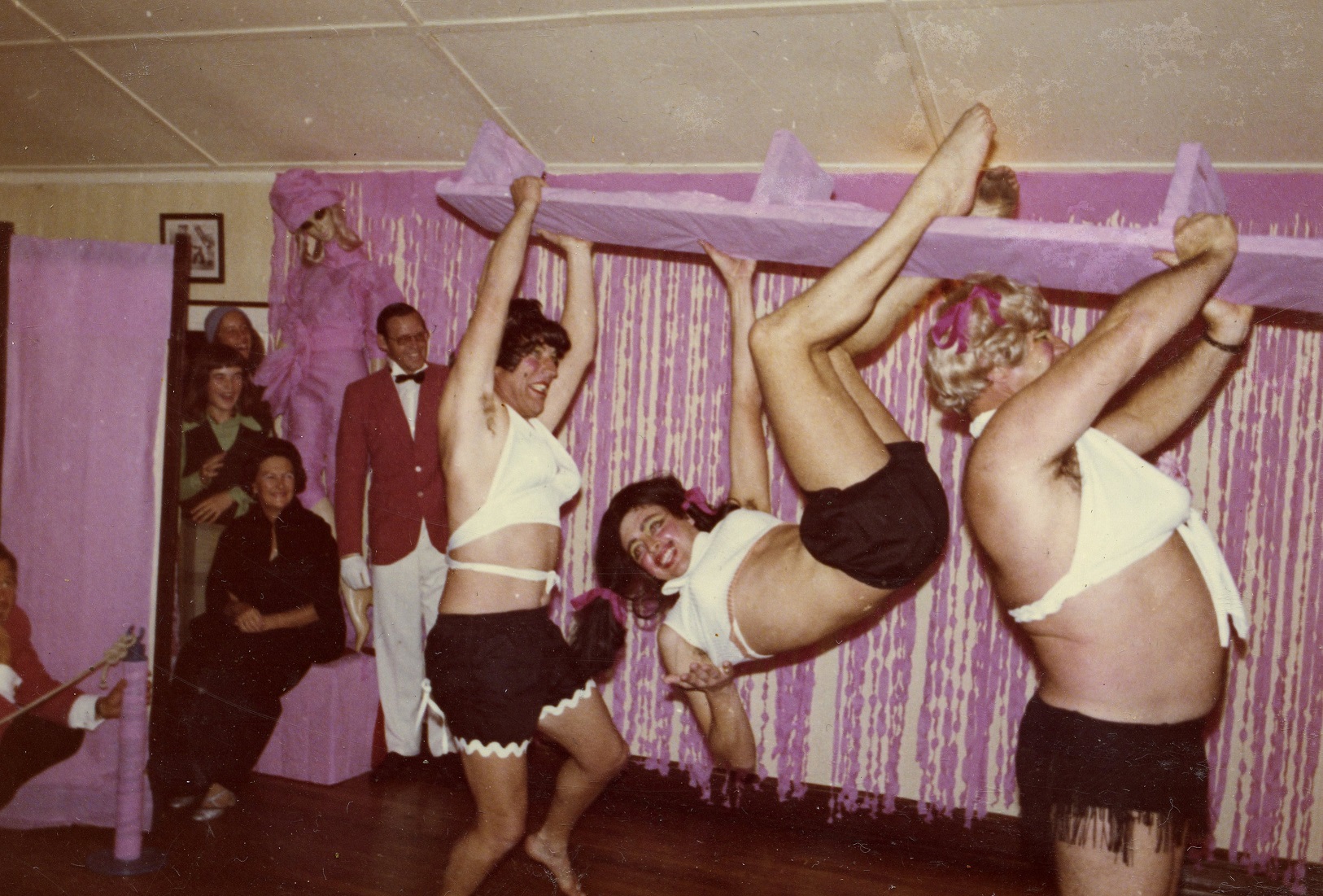
1973 was a BIG year in Redhouse. The Zwartkops Rowing Club celebrated its centenary with a well-planned series of events, including the reintroduction of rowing as a regular sport, culminating in a huge party entitled “Dancing through the Ages”, see picture. Most amazing fun. In December, senior yachting personality Alec Paterson introduced the Laser dinghy to the RYC. We laughed at it, calling it plastic Tupperware. We did not foresee the future of yachting.

The world population passed four billion in 1974 and the British and Irish Lions tour of twenty-two matches took place. The “Invincibles” led by Willie-John McBride won 21 games and drew the first in controversial circumstances. The tour scheduled for 2021 (COVID-19 permitting) will only feature eight matches.

The Vietnam War ended in 1975, a defeat for the USA that cost them close to 60 000 lives. Portugal abandoned its empire, leading to independence for Angola and Mozambique and long and debilitating civil wars in both countries. The first cricket world cup took place.

In 1976, the Soweto student uprising ended in numerous deaths. The first of South Africa’s puppet states, the Transkei Republic, was constituted. Traveling through the Transkei required your passport to be stamped at the bridge across the River Kei.

The first mass production of personal computers took place in 1977, Elvis Presley died, Star Wars became the highest-grossing film ever made, and the Voyager 1 and 2 spacecraft were launched. They are still travelling, the most distant man-made objects in the universe.

In 1978, Spain reverted to democracy under King Juan Carlos 1, the first test-tube baby was born, and the ANC attempted to kill about 500 of its own cadres by poisoning their food because an infiltrated enemy agent could not be identified. And this lot rule the country?

Smallpox was eradicated in 1979, the Rhodesian Bush War ended, and Margaret Thatcher became Prime Minister in the UK.

The 1980s were turbulent times indeed. The country was in a permanent state of emergency. Security patrols in the Village at that time were a lot more likely to encounter trouble than at present, not that we can afford to be complacent. One of the more hilarious incidents involved half a dozen burglars who broke into the now-demolished hockey club building via a serving hatchway. That night, four patrols were in position across the Village, in radio contact. The closest group found two bandits waiting for their mates to pass out the plunder, one fled, the other was whacked with a number four iron by a keen golfer. He was picked up in due course by the police, nursing a cracked scull. The lads inside climbed out of the hatchway straight into a police van.

In 1980, Iran and Iraq started an eight-year long war which had throwbacks to WWI, including the use of poison gas. Russia got entangled in Afghanistan, a move it came to regret. Rhodesia became Zimbabwe. Back home, the sailing scene in Port Elizabeth was dominated by large numbers of Hobie Cats and Windsurfers, and dinghy racing at RYC remained strong.

Part of Laingsburg was swept away within minutes by a major flood in 1981. Prince Chares married Lady Diana Spencer. The AIDS epidemic began.

The UK sent a task force a long way to recover the Falkland Islands from Argentina. A 74-day campaign led to a decisive victory for the British. Mrs Thatcher gained much popularity and the Argentinian defeat resulted in the eventual return of democracy to that country.

Redhouse experienced another major flood in 1983. The counter current along the Towpath was so strong that it carried a heavy clinker-built rowing boat 500 metres upstream! Australia won the America’s Cup, the first ever defeat for the USA in 132 years. Shortly afterwards, our SA team at the Laser World Champs in Gulfport, Mississippi experienced apartheid, American style.  

Happy memories of O’Hagan’s pub in the French Quarter of New Orleans, along with paddle steamers, much music and loads of fun. One Rand got you US$1.20.

In 1984 Anglican Archbishop Desmond Tutu was awarded the Nobel Peace Prize, and I learnt how to cook a sheep suspended inside a 44-gallon drum dug into the Towpath, with the fire built around the outside. Steam-cooked lamb, absolutely the best.

By the mid-1980s climate change was becoming a topic of conversation. The Greenpeace ship Rainbow Warrior was sunk in Auckland harbour by French secret agents. The world economy was sick, and in South Africa it was worse. Port Elizabeth suffered greatly and at one time a third of the houses in Walmer were on the market. “Last one to leave PE, feed the dolphins and turn off the lights”.

In 1986, Chernobyl’s nuclear power plant exploded. Halley’s comet showed up. The following year the stock markets crashed world-wide. In SA, the situation was exacerbated by international sanctions. The world population passed five billion.

During the Laser National Champs in 1988 a fearful north-westerly gale came out of nowhere just after a fleet of 72 boats had returned from racing in Algoa Bay. A massive container crane slipped its brakes and toppled off the end of the Charl Malan quay in Port Elizabeth harbour. I still get the shudders thinking about what might have been if we hadn’t decided to bring the fleet ashore so we would get the sailors to the Mayoral cocktail party on time.

In 1989 the Berlin Wall fell, and the Soviet bloc collapsed. South Africa dismantled its nuclear fission devices. Change was on the way. The Border War ended and talks between the government and formerly banned parties began. The following year, Nelson Mandela was released from prison. The Gulf War devasted Iraq and the World Wide Web was invented.

Evidence of change in South Africa was everywhere. The white percentage of the population had sharply declined. The first census in South Africa in 1911 showed that whites made up 22% of the population. This had fallen to 16% in 1980. Forty years later, it is probably about 8%.

In 1980, sports clubs in Port Elizabeth and surrounds were booming. RYC had so many boats multiple starts were always necessary. The Redhouse Hockey Club fielded four teams. By 1990, the RHC was no more, along with many other hockey, rugby, tennis, and soccer clubs. The RYC is a shadow of its former self but has hung in there, keeping the flag flying for yachting.

In 1991, the first website became available to the public. Namibia and 15 former Soviet republics gained independence. In 1992, a 13-kilogram  meteorite destroyed a car parked in a family’s driveway in New York.  Pope John Paul II realised the world really was round and lifted the Inquisition’s edict against Galileo Galilei posted 350 years earlier. The European Union came into being.

A new interim constitution was approved in South Africa, and finally in 1994, South Africa adopted a new constitution and the ANC took power, with Nelson Mandela as president. It was an interesting time!

Redhouse and the Union

The 20th Century dawned midst all the drama of the Second Anglo Boer War. The Boer forces of the Transvaal Republic and the Orange Free State, numbering somewhere between 40 000 and 50 000 mounted and well-armed sharpshooters, backed up by 5 400 foreign volunteers (the Staats Artellerie armed with the most modern guns available) and at least 10 000 black auxiliaries, had taken the offensive against the 13 000 available British troops.

As usual, the Brits were unprepared. Not much seemed to have changed in the mindset of the military authorities since Waterloo in 1815. They got a fat snotklap to start with, but they had three major advantages.

The Boers had no strategic plan, for example tying up large numbers of their people in desultory sieges at Ladysmith, Kimberley, and Mafikeng, thus giving the Imperial government time to reorganise.

Secondly, the Empire had manpower. Eventually half a million British and Empire troops took part in the war, plus 100 000 local black auxiliaries.

Thirdly, they moved the old and bold generals aside and sent in some pretty ruthless dudes to end the war. The capitals, Pretoria and Bloemfontein, were taken within six months, but then the Boers started a two-year long guerrilla war.

The Brits found a solution and it wasn’t pretty. A scorched-earth approach which included herding the population, white and black, into concentration camps, while devastating the countryside, eventually drove the Boers to surrender in 1902. The scene was set for many decades of animosity between Afrikaner and English.

Meanwhile, Queen Victoria flit the scene in 1901. She had reigned for such a long time that all knowledge of how to organise a royal funeral for a Queen and Empress had long since been lost. The funeral procession can actually be viewed in a Pathé “moving picture”. The cortege started off being drawn by Royal Artillery horses. They had been standing still in freezing weather for too long. They kicked off their traces and went home. Prince Louis of Battenberg, grandfather of Prince Philip, husband of Queen Elizabeth II, ordered a contingent of sailors to take over. They pulled the cortege to the cathedral. This started a new tradition, still observed today.

King Edward VII, a merry fellow, took over. Queen Alexandra was most understanding about his girlfriends, of whom there were said to be about fifty-five. One of them was the famous actress Lily Langtry.

He said, “I’ve spent enough on you to buy a battleship”.

And she said, “And you’ve spent enough in me to float one!” Touché!

As at the beginning of the previous century, new technologies arose by the dozen. In 1900 the Brownie camera launched Kodak and the concept of snapshots, and the first Zeppelin airship took to the skies. The following year, the first electric typewriter was produced.

In 1903, the Wright brothers performed the first recorded controlled, powered, sustained heavier than air flight at Kitty Hawk in North Carolina. However, airborne antics had been going on for a lot longer, involving all manner of balloons, airships, and generally disastrous attempts at heavier than air flight.

In 1904, Redhouse was making progress. Proposed by Mr J C Carden, a very active resident as we shall see, the Redhouse Sailing Club was established, but shortly afterwards changed its name to the Redhouse Yacht Club in deference to the Redhouse Swimming Club, which had been started in 1896. We couldn’t have two RSCs for goodness sake!

In the same year, the splendidly named Redhouse Women’s Vigilance Society Committee was formed. Sunday School had outgrown the living-room of Mrs. Chaplin’s home, so they decided to build the Village Hall. The Swartkops Valley Land Company sold them the plot for one pound sterling, and their husbands were touched for the building costs. What a history that old Hall has! It needs its very own blog!

In 1905 Albert Einstein published his theory of special relativity, embodying the famous equation E = mc2.  Quite something for ordinary mortals to get their heads around. And then along came quantum physics to really blow your mind!

On the 16th February 1906, the visiting English cricket team played an E.P. XI. The evening’s entertainment was an enactment on the River of the Japanese warships attacking the Russian Fleet at Port Arthur during the recent war. There are photographs showing all the action. J C Carden was in charge.

In the same year, the first Springbok tour of the UK took place; J C Carden was the Manager. Somewhere in the ZRC is a flag he brought back from the Isle of Man, with its unique three armoured legs. JC was a busy man!

Also in 1906, two Zulu clans led by Chief Bambatha, rose in rebellion against a new poll tax designed to drive menfolk into the labour market as there was a shortage due to competition from the gold mines in the Transvaal. 4000 were killed in a one-sided battle of assegais against machine guns. For his pains, Bambatha’s head was cut off and displayed to the public.

In 1907, Myfanwy Gipson was born. Her family came to live in the Village and a few years ago a manuscript was discovered in the archives of the Redhouse Women’s Association, in which she describes life in early Redhouse. Fascinating reading. She lived to the ripe old age of 96, having spotted Halley’s Comet twice in her lifetime.

In 1910 King Edward VII was succeeded by George V. On 31st May, the Union of South Africa came into being. In 1912 the unsinkable Titanic sank with great loss of life.

Then came World War I, a war which appears to have started almost by accident. Approximately 40 million people died. The world was a very different planet after the guns fell silent.

Back in Redhouse, some members who had been on active service against the Germans in South West Africa (Namibia) arrived back before the end of the War and took up residence in the two-roomed Yacht Club building, which was known as Banda Jumbo and soon became the meeting place for the young people of the Village.

Back came the soldiers and with them the dreadful Spanish Flu, 100 years before the current COVID-19 pandemic. Another 50 million people died worldwide. South Africa is alleged to have lost 300 000 in six weeks. To put these losses in context, the world population in 1920 is estimated to have been about 1.8 billion. So WWI and the Spanish Flu removed less than five per cent of humanity.

The Village Hall was one of six special hospitals set up to manage the pandemic in the Port Elizabeth area. Under the watchful eye of Mrs. Sarah Toft and her staff of volunteer nurses, patients were nursed back to health under strict conditions of hygiene, encouraged by Mrs. Toft’s “cure-all” – a daily glass of champagne! To her great credit, she and her team of helpers never lost a single patient.

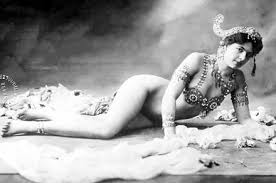
The great tragedies of war and plague gave way to the Roaring Twenties, the era of the Flapper, young girls who smoked in public, drank alcohol, danced at jazz clubs, and practiced a sexual freedom that shocked the Victorian morality of their parents. See the image for this post – typical Redhouse girl!

Not sure how many we had in Redhouse in those days, but the Village has from time to time gained itself a salacious reputation. Long may it continue!

The first reliably recorded shark attack in Port Elizabeth took place at Redhouse on 3rd Feb 1920. Miss Thea Toft, 18, was bitten on the bum by a cheeky fellow. Fortunately, her father, who was close by, jumped in and hauled her out. Her costume was displayed for years in the Port Elizabeth museum. 

In the same year, the first aerial photographs of the Village were taken. It is fascinating to see the change in the landscape a century later.

In 1922 the army and air force were called in to suppress striking miners on the Reef. 200 dead and 500 wounded later, the strike was over.

In 1924, the first River Mile took place, and continued annually until municipal ineptitude allowed pollution levels to rise to the point where the event had to be moved to the Sundays River.

A famous tradition started in 1928 (some say even earlier) when Father Christmas came down the River to be greeted by many happy children. This Christmas Eve event takes place to this day and draws many folk from all over the world who return to their childhood playground.

All the fun and games came to an end when the Great Depression broke the world economy in 1929. South Africa suffered but at least had the gold mining industry as a backstop. Worldwide demand for gold grew as stock markets crashed.

In 1930 Redhouse received electricity, in the form of a diesel generator which was eventually replaced by municipal power. I understand that the original generator was redeployed to a house built on the beach at Laurie’s Bay.

During September 1934, the Council decided to build a road linking Redhouse and Zwartkops. Before that you went to town via Veeplaas. In 1936 the Benevolent Society came into being to provide for the poor and needy from the nearby townships. Its work continues.

In 1939 a site was granted for the erection of a church on the west side of the Hall and a building fund was started. However, World War II intervened and building only started in 1952, the first service at St Nicholas being held on June 7th of the following year. The patron saint of children and of sailors, St Nicholas was an appropriate choice for a village with plenty of both!

Many men and women went to war and some didn’t come back, others were knocked about a bit. The Village ticked over until the end of the war.

In 1945 the troops began to return and then the fun started. Nobody had much money, but they all seem to have had a merry time; babies arrived in droves. Lots of people stayed at the Sanitorium, known locally as the Sanny, the old hotel where a new castle has emerged out of the septic tank, the last remnant of the old building.

The present library was a shop in those days, owned by Valayden from Veeplaas. Once the Nats took over, he lost the shop. Long before that, the library was housed in the Hall, in the little storeroom on the north side.

I have always imagined that septic tanks were in operation from the time of the first houses being built. But it is only in the 1950s that they became a regular feature. Before that, a coloured gent called Roman operated a bucket system. He would collect them in his donkey cart. Where he deposited the contents, I have no idea.

In the general election of 1948, Jan Smuts lost to the National Party and the Apartheid era began to take shape. It is interesting that his friend Winston Churchill also lost an election at the end of the war.

In 1950 Jan Smuts died. A most amazing man. From Boer Kommando leader to Field Marshall in the British Army, the only person to have signed the peace treaties for both WW I and WWII, a founder of the League of Nations, the list of his achievements goes on and on. What would he think of the clowns running the world at present?

In 1959 the Redhouse Primary School moved out of the Village Hall into the new building. There were only four standard five (grade 7) kids that year. Today over 400 kids drawn mainly from Motherwell attend the school.

In 1960, the white electorate voted in a referendum to form a republic. The vote was very close indeed with a 90% turnout. Just over 52% voted in favour. The following year the Union was dissolved, South Africa left the Commonwealth and the Apartheid experiment began in earnest.

Meanwhile, back in 1953, the Zwartkops Rowing Club built a bowling green on what had been an orchard fifty years before. Not quite as old as the green in Southampton, first used in 1299.

Every weekend, the ancient “white ants” put in their tabs and bent their hoary heads over the mat before they urged their wobbling balls at the faraway jack. At the end of a long afternoon, piles permitting, they staggered into the main bar, by then overpopulated with golfers and yachtsmen. The bar was hectically busy! All the fun happened on Sundays in those faraway days, I am not sure how much work got done on Mondays.

Bowls was a serious business and various brave men took on the role of greenkeeper. Maintenance of the green is a demanding job by all accounts and involves scarifying, mowing to an exact measurement, dealing with floods and droughts, and begging for money.

None of the greenkeepers at the ZRC died of a heart attack while in office, so they were obviously unaware of the nocturnal assistance in rolling the green provided free of charge by the lusty young (and sometimes not so young) folk of the Village. “Jack’s up” took on an entirely different meaning at night!

Redhouse and the Empire

As 1799 rolled into 1800, Algoa Bay was the scene of much mayhem as the Third Frontier War muddled along. The British handed back the Cape to the Dutch in the middle of it all and removed themselves from Fort Frederick with great relief.

The Fort was used as a place of refuge by the local farmers as bands of displaced Quena roamed the area in revolt against those who had destroyed their traditional way of life and subjugated them as servants.

The restored Batavian (Dutch) government at the Cape accepted that they were not going to get the AmaXhosa settled to the west of the Fish River to head east. Live and let live. Peace broke out.

Meanwhile in England, technological progress advanced at speed. The first steam locomotive puffed along in 1802 and  the first practical steamboat towed barges along a canal in Glasgow a year later. The British began to use rockets in naval and land warfare, which incensed their enemies because it was so blatantly unfair. They didn’t have any rockets.

Four hundred years before they had pulled the same dirty trick when they used longbows to win battle after battle against the French who had none.

In 1804 Uitenhage was established on the widow Scheepers’ farm and two years later Colonel Jacob Glen Cuyler was appointed as its Landdrost, and commander of Fort Frederick.

The short-lived Peace of Amiens collapsed. In 1806, The Brits pulled off a mini-D-Day, landing redcoats at Bloubergstrand and beating the Batavians in a brief battle. The Cape was added to the Empire, along with the mounting tide of trouble on the eastern frontier.

Here Colonel John Graham enters the picture. In 1811 the fourth Frontier War broke out and he established his headquarters on a patch of veldt which eventually became known as Grahamstown. The Governor, Sir John Cradock, instructed him to drive the AmaXhosa east beyond the Fish River, limiting bloodshed to no more “than was necessary to impress on the minds of these savages a proper degree of terror and respect”.

Lack of communications was a big problem in those days. No WhatsApp. In 1812 the Brits finally agreed to stop harassing American ships and hijacking their British-born sailors. But the news got to the States after Congress declared war. When peace was declared, the news arrived late again, and the Battle of New Orleans was added to the list of disasters inflicted upon British troops by incompetent commanders.

During this rather pointless period of bloodshed – really a serious family feud – the Brits stormed Washington and invaded the White House, which was so hastily evacuated by its tenants that the British officers sat down to a lovely dinner complete with some jolly fine wine. Replete after the best meal they had tasted for a very long time, they burnt the place down.

About this time, the site of the future Redhouse belonged to the loan farm Zwartkopswagendrift, named after the only crossing place on the River, the drift at Perseverance.

This farm was originally established by a Meneer Van Rooyen.  In 1817, it was  incorporated into Fishwater Flats, a vast area that stretched along the Swartkops River, granted to Colonel Cuyler as a quit rent farm. Don’t get confused by Swartkops and Zwartkops. Same river.

In 1815 the Great War finally ended at the Battle of Waterloo and Napoleon was carted off to St Helena.

Many years ago, the Bennett family lived on the Towpath at Redhouse. Two brothers, Percy and Alan, and their sister Daisy, and a dog called Bones, reputed to be able to see ghosts. The story goes that their ancestor, a Captain Bennett, was part of the garrison on St Helena when Napoleon died in 1821, and his mahogany dining room table was used to make the coffin.

Meanwhile, civil war broke out between the Chief Ngqika’s Rharhabe and Chief Ndlambe’s Gcaleka. The former had previously signed a treaty with the Cape government which required British military support in the event of trouble. And so started the Sixth Frontier War.

In due course, Ndlambe agreed to the prophet Makana’s plan to attack Grahamstown with 10 000 warriors. Makana claimed that the British bullets would turn to water. Ndlambe sent a message to Colonel Willshire, commander in Grahamstown, saying that “he would breakfast with him on the 22nd  April”, to which the colonel replied that “everything will be ready for you on your arrival”.

The defenders, a hodgepodge of British troops, local militia and citizens, reinforced by a band of Quena, defended the town with muskets and light artillery against the spears of the attackers. A thousand Xhosa were killed and Makana ended up on Robben Island. Some breakfast!

In 1817 the Dutch man-o-war Amsterdam was driven ashore on the beach near the Swartkops River mouth by her captain, as she was in a decrepit condition and rapidly sinking.  The village which was eventually established at the mouth was named Amsterdamhoek, and the flat land south of the estuary became Amsterdam Flats. Whatever was salvaged was sold by auction. All the crew and passengers survived except three sailors washed off a raft.

And then the 1820 settlers arrived, and life was never to be the same in the Eastern Cape again. The Government wanted the settlers to create a buffer between the AmaXhosa in the east and the colony to the west. The post-war economic slump in the UK lead to hard times for many. 90 000 people applied but only 4 000 were accepted. They arrived in numerous small groups between April and June 1820 and were dropped off in the interior to build a new life in circumstances with which they were totally unfamiliar.

In due course, the Albany district evolved into a unique Anglo-Saxon enclave surrounded by Afrikaans-speaking people and the AmaXhosa.

At this time, Capt. Fairfax Moresby of HMS “Menai” noted that “the Zwartkops would become a river of the first consequence if Port Elizabeth should continue to flourish” and that it was possible for ships to cross the bar for much of the time.

There were always stories of small ships sailing up to Uitenhage in the old days, but I would doubt they got further than the drift at Perseverance. For sure, a large anchor was found at Bar None years ago which must have come off quite a big boat.

From small beginnings, Port Elizabeth grew and in 1837 was declared a magisterial district, the same year Queen Victoria ascended the throne and sat there for a very long time.

In 1845, the British Admiralty was being badgered by the proponents of two competing methods of steamship propulsion. So they organised a tug-o-war between the Rattler (propeller) and the Alecto (paddle wheels). Both ships were of similar size, and they both had 200HP engines. The Rattler towed her opponent backwards at 2.8 knots. Just as well. Imagine water skiing behind a boat with paddle wheels!

In 1846, the Seventh Frontier War began. Chief Sandile began his long and illustrious military career, which ended with his death in the ninth and final war in 1879.

I am amazed that the film industry hasn’t cottoned on to Eastern Cape history. There was way more bloodshed and general mayhem over this one hundred-year period than in America’s Wild West and Natal’s much publicized Zulu wars. Think about how many people could be employed! We would have no problem with extras for the battle scenes. Our people are good at that stuff!

By 1850 there was more and more traffic heading north from Port Elizabeth, and a ferry began to operate in the area where the Wylde Bridge is situated today.

My guess is that by this time the odd visitor from little Port Elizabeth had found his way to the future Village. This may have been when the original “Red House” was erected. It stood where the Lippstreu Gardens are now. The reed and mud hut was occupied by an old seafaring man named Cook who was employed by a Mr Blaine, a keen angler, to prepare bait for his trips from town on weekends. “The Hut” was eventually moved to the River front. It is claimed that its foundations might still be seen at number 38 Towpath.

In 1856 the Port Elizabeth Divisional Council was formed. Redhouse fell under this august body until it was incorporated into Port Elizabeth in 1967. A year later, the Zwartkops Land, Irrigation and Water Works Company was established. More on this lot later.

In 1869, the last public execution in Port Elizabeth took place on the green before the North End jail. When I read this, I immediately thought about the modern-day City Council.

The Port Elizabeth Boating Association was formed on the 2nd September 1873. At a meeting in the Algoa House Hotel, it was decided to build a boat house on the Swartkops River at Redhouse, form rowing clubs and order boats from England. Four arrived in December aboard the Windsor Castle.

The clubs established were the Zwartkops Rowing Club, The Southern Cross, the Ino and St. Georges. Annual regattas were held at Redhouse. Only the ZRC survived. Its clubhouse was originally constructed down the Towpath before being carted off to its present site lock, stock and barrel.

The stretch of river surveyed by Robert Pinchin in 1875 was at this stage named “Henley’s Reach” but the area was already known as “Red House” and the name stuck. Pinchin’s Henley Reach is now the stretch of River immediately downstream of the Village, leading into Box Reach at the bend.

The origin of the name, Redhouse, is up for debate. Two alternative suggestions have been made. In the one explanation, it is claimed that the hut was coloured with red ochre, making it a conspicuous landmark. A black and white photograph exists showing its distinctive colour. It has also been suggested that the name was merely a corruption of “Rooyen se huis”, after the original owner of the area.

The railway line first connected PE and Uitenhage in 1875, thus making Redhouse more accessible to Port Elizabethans keen on rowing and sailing.

On the 6th October 1875, eighteen plots along the Swartkops River at Redhouse were offered on a 10-year lease. By May 1876, the Ino Club had erected a 60×15 feet galvanised iron club house.

There is a drawing depicting a major rowing event at Redhouse in May 1876. The riverbank looked very different then. Not to be outdone, the sailors put on the first yacht race at Redhouse, between three boats respectively weighing in at 5, 3 and 2 tons. One assumes that they sailed them upstream from the Bay. This took place in 1879.

By the beginning of 1883, a new cottage had replaced the original red hut.

The first cricket test in South Africa took place at St George’s Park on 12th March 1889, between an English touring side and a South African XI. The visitors won comfortably. Port Elizabeth also hosted the first rugby test, on 30th July 1891. The visitors won again.

In 1897 Zwartkops Land, Irrigation and Water Works Company bought the farm Fishwater Flats and began to sell plots at Redhouse. The company was restructured as the Swartkops Valley Land Company in 1904. In the 1970s there were still 67 house-owners in Redhouse who paid annual quitrent to this company.

The strip of land on the other side of the River at Blackburn Reach (where the horrible Motherwell Canal now downloads its endless flood of filth into the River) was inhabited by the Blackburn and Deare families at about that time. There is a picture of a cricket match being played there. Eventually, Mr Deare took down his wood and iron house and it crossed the River and was re-erected in Deare Street.

In 1899 the Second Boer War started. I have a picture of the Redhouse Village guard in uniform with rifles and bandoliers of bullets. North of the Village there are traces of earthworks thought to have been dug at that time.

While doing research on the Victorian period, I could not help noticing how ridiculous men looked wearing stovepipe hats. Even more ridiculous were the hoop dresses worn by the ladies. Further investigation into female fashion revealed some shocking facts.

Imagine our ardent suitor from early Port Elizabeth, who has managed to persuade his lady love to come on a picnic outing to that lovely spot where the Red House stands. Presumably, they set off by mid-morning and travel in a horse-drawn conveyance of a size suitable to accommodate the lady’s crinoline hoop dress.

Let’s assume that he finds a suitably private tree along the riverbank, one hopefully without egrets and their odorous poo, and let’s assume it’s the dry season and mosquitos aren’t a problem. Factor out snakes and fishermen as well. Its paradise.

Out comes the white linen cloth, tasty snacks and bottle of cold champagne. Yes, he had a small ice chest in the carriage.

The moment arrives, and he contemplates the task of getting past the lady’s defences. Bear in mind that a girl in a hoop dress is exactly like a girl standing in a fair-sized circular tent with her head sticking out of the top. In order to kiss her, he has to lean over at an angle bound to crick his back just to get close to her lips.

The hoop dress is merely the outer covering for at least two petticoats and the dreaded corset, a fiendish piece of engineering capable of reducing the normal 28-inch female waist down to 16 inches!

It must have taken ages to put on and could not be done without the help of a couple of servants.

It puzzled me greatly as to how the poor bugger got past all this armour. And then I discovered the secret to why the population exploded in Victorian times. Until the 20th century – and here I must advise parental guidance – the knickers worn by ladies were actually two unconnected leggings tied together at the waist. They were separate garments with no connection in the middle, if you get my drift.

We must here assume our lover made it into the tent, and well! As they say in the world of marketing strategy, there were no barriers to entry! (I must confess, I blush – exit stage left!)

Redhouse and the VOC

Fast forward to 2020! Entrepreneurial spirits took advantage of the COVID-19 lockdown to extricate five hundred metres of copper cable from the ground, leaving most of Redhouse cut off from the outside world for a week.

Unluckily for them, the copper price has crashed of late and when the scrap merchants open up, the robbers are in for a sad shock.

The gentle reader might be forgiven for assuming that the VOC title refers to the rivers of Very Old Cognac consumed over the years in Redhouse. But no, we have advanced to the age of the Vereenigde Oostindische Compagnie aka the Dutch East India Company.

After Vasco da Gama made it to India, the Portuguese had a hundred years of free travel around the Cape to the East Indies without any let or hindrance from pesky foreigners.

It’s true that Sir Frances Drake rounded the “fairest cape of them all” in 1580 during the first English circumnavigation of the planet, and some French ships had been to have a look, but in general the Portuguese enjoyed the monopoly granted them by the Treaty of Tordesillas signed in 1494 whereby they were allocated the eastern route and the Spanish got the west i.e. the Americas.

Further north, two contenders for sea power were stirring. The Dutch fought an eighty-year war to rid themselves of Spanish rule, and they did it mainly by building up a force of piratical sailors called the Sea Beggars who crippled Spanish trade to northern Europe.

Their fellow Protestants, the English, cared not a hoot for Iberian treaties and sent their own pirates to prey upon the new Spanish possessions in the Caribbean and the Americas.

These two emerging maritime nations occasionally came to blows. Mostly they were united against France and Spain, but sometimes politics intruded. They fought four wars over a period of about 130 years. The second war saw the introduction of the Line of Battle where ships sailed in disciplined rows a few hundred feet apart and cannonaded the hell out of each other.

The Four Day Battle occurred in the first week of June 1666. Eighty English ships versus one hundred Dutch. The Dutch decided to call it quits before day five began, but the cost to the Royal Navy in lives lost was not exceeded until the Battle of Jutland in 1916.

In due course, the Dutch and the English realised that there were enormous profits to be made out East, so they began to intrude on Portugal’s preserve.

They formed companies to fund each voyage. Normally, a small fleet of ships would be sent out and if and when they got back, the cargoes would be sold for up to fifteen times as much as they cost. The profit would be paid out to the shareholders and the company dissolved.

This high-risk adventuring evolved into the formation of the English Honourable East India Company in 1600 and the VOC two years later. These chartered companies held a monopoly in their own countries, thus ensuring great profits at much reduced risk.

The VOC was so well organised that it is recognised as the forerunner of modern multi-national corporates and its history is taught in business schools to this day. By 1669, it was the richest private company the world had ever seen, with over 150 merchant ships, 40 warships, 50,000 employees, a private army of 10,000 soldiers, and a dividend payment of 40% on the original investment.

Both companies did famously for a very long time but eventually lost the plot. From 1720 onwards the VOC began to decline and was dissolved in 1799, all its assets on land and sea being taken over by the Dutch government.

The English company grew into a massive organization. At the height of its power in 1803, its private army numbered 260,000, double the size of the British army. It ruled vast swathes of India. It was brought down by the Indian Rebellion of 1857 and the following year the British Government took control. It was finally dissolved in 1874.

Both these companies brought way more wealth to their respective homelands than did the Spanish and Portuguese royal monopolies. The reason should be blindingly obvious to the modern South African government. The Dutch and English model was based on free enterprise. The Iberian equivalents were state-owned enterprises. Whatever profits the latter made were squandered by the government.

That’s the inherent problem with tax. Those who spend the tax don’t have any idea how hard it is to generate it in the first place.

While the Portuguese were not interested in the Cape at all, the Dutch and the English recognised that it would serve as an ideal halfway house on the long and horrible voyages to the East, a place where fresh water and vegetables could restore to health crews devastated by scurvy.

There appears to be no cure for stupidity. It was recognised before 1600 that scurvy could easily be prevented by administering lemon juice to the ship’s crew and passengers once the fresh vegetables ran out. Certain skippers did this and kept the mortality rate down to reasonable figures.

But it took until 1795 before the Royal Navy made it mandatory to include lemon juice along with the daily grog issue.

Meanwhile, going to sea in an East Indiaman was a highly dangerous choice of lifestyle. It was normal to lose between one third and one half of the people. In one six-year period, of 5,228 soldiers who embarked at Lisbon, only 2,495 arrived in India.

It could take five months for an East Indiaman to reach the Cape. Some ships arrived there in such a disastrous state that the few remaining sailors couldn’t bring them to anchor, and relief crews had to row out from the shore to rescue them.

It is hard to imagine in this sanitised age what the tween-decks situation must have looked and smelt like after five months at sea with scurvy and dysentery raging. What did they do when the call of nature was urgent?

The captain had his own private loo. The crew shared the “heads” – so-called because the facility was situated in the bows or the head of the ship, which would normally be pointed more or less downwind.

Once upon a time I visited a replica of the Dutch East Indiaman “Amsterdam”, at the Maritime Museum in Darling Harbour, Sydney. I checked out the heads, out of interest, not necessity. I wondered how the lads wiped their hairy bums. Ropes extended down to the water, with the ends “fluffed out”. I gather you pulled up the rope when done and cleaned up. At least they didn’t have to horde loo paper.  Imagine timing your bowel movement in sync with the waves crashing over the bow! Eish!

Jolly Jack Tar, a veteran sailor with a wooden pegleg, has the runs and desperately needs to get forward. It’s one bell in the middle watch – 30 minutes past midnight for you landlubbers – the wind is pumping 30 knots and the ship is close-hauled on the starboard tack – meaning the wind and consequently the sea is coming across the starboard bow, and the rain is driving sideways.

Observe the picture at the top of page one. Note the holes in the deck on the way to the seat of ease, designed to drain the water coming across the bows.

Jack stumbles forward in desperate haste, feeling his way in the pitch-black night, guts heaving, hold it in, hold it in, almost there, he gets a shock of spray full in the face and with that his pegleg goes down a drain hole! Now that’s kak luck!

There was no way for sick people to get to the heads, even in fine weather, let alone in rough seas. They lived and often expired in their own mess.

So now we know why the Dutch and the English wanted to secure the Cape as a place of refuge and replenishment. In 1615, the English conscripted a party of convicts headed by one Captain James Crosse, a notorious highwayman. They were given the choice between the gallows or the Cape.

They were landed on shore with some weapons, a few provisions and some turnip seed and told to make friends with one Goree, a Khoi chief who had previously been taken to India and taught English. Oh yes, and please establish a settlement while you’re at it. Captain Smythe summed up their chances and asked for a ship’s boat.

Once the fleet had departed, he rowed his band of baddies across to Robben Island which received the first of many consignments of prisoners onto its inhospitable shores, covered with guano and seabirds and apparently large numbers of mole snakes which grow to be two metres long. How did the snakes get there? Probable cut off from the mainland when the sea levels rose thousands of years ago, as they have evolved differently to the mainland variety.

Finally, Jan van Riebeeck started the Cape Colony in 1652, as we all well know. This didn’t bother the Brits as even in wartime the Dutch allowed them to land and recover. Scurvy and the sea were the common enemies, so it was live and let live and pass that excellent Cape brandy.

The Dutch and later arrivals such as the French Huguenots eventually expanded out of the original bounds of the Cape Colony. The further away from Cape Town they travelled, the more they morphed into the “trekboeren”. They lost most of the vestiges of civilization and travelled ever eastwards in their ox wagons, living off the large herds of buck available in those days. They grew into a tough and independent race. All they really needed from Cape Town was ammunition.

In 1702 a well organised party travelled to the Fish River where they encountered the AmaXhosa. This is recorded as the first encounter between the races, but someone knew the way. Plenty of shipwrecked sailors had walked the shores over the centuries. Quite a few had been absorbed into local tribes.

The AbeLungu clan has proven to be descended from white forbears via DNA testing. Even more fascinating are the AmaMolo. Oral history claims they arrived in strange ships, dressed in long white robes, a long time before any whites came along. Their DNA points to an Indian origin. All they could say was “Molo”, the Xhosa greeting, and the name stuck. Both clans live along the Wild Coast.

Getting closer to home, who lived along the Swartkops River at the beginning of the 1700s?

The  AmaGqunukhwebe – try saying that without hurting you tongue, mlungu! – is a tribe created by King Tshiwo, paramount Chief of the Ama Xhosa from 1670–1702 from the remnants of Khoikhoi tribes such as the Gonaqua, Hoengeniqua, Inqua and others retreating before the trekboers advancing from the west. They inhabited the land between the Qonce (Buffalo) and Qhagqiwa (Swartkops) rivers, but there is no evidence that they took up residence in our future Village.

When the Village Hall still served as a primary school, many decades ago, I remember that behind the hall there was a crude hut inhabited by an old crone we called Witchy. We were suitably scared of her. What her origins were I know not, but she looked old enough to have been around for a couple of centuries.

Now that you are bored stupid by all this history, let me tell you that we are on the brink of exciting times, where history comes to Redhouse! Hang in there, lockdown is nearly over!

Redhouse and the Portuguese

If you read the first episode of this saga, you will remember our man !Click, who may have been done to death by the Phoenicians. Surely, the sceptic asks, isn’t it far more likely that the Khoikhoi did him in? After all, the former hung about for a couple of months, whereas the latter had fifteen hundred years in which to lose their cool with !Click.

I don’t think so. If there had been an altercation, the victorious Khoikhoi would have been left in possession of their encampment on the site of the future ZRC bowling green, the San would have fled, and the victors would have chucked !Click’s body into the River to get rid of the evidence, a custom I can tell you is honoured to this day.

Back to the first millennium of the Christian era. While Europe lived through its dreadful Dark Age, the happy fellows down south continued their blissful existence in the sun, generation after generation, pass the Karri, no worries mate, as those aboriginals say on that hot continent this side of New Zealand.

Eventually, someone turned the lights on, and the Dark Ages passed. What kickstarted the process, in my humble opinion, was the balance of trade. The people of Europe, whose main contribution to civilization for the past many hundred years had been constant warfare and the odd magnificent cathedral, became aware that the people to the east of them enjoyed a much higher standard of living.

Everything they heard from the ships arriving from the Eastern Mediterranean sounded too good to be true. Fine clothes, smart houses, exotic foods, a wide variety of wines, the list went on and on.

They wanted some too. But how to pay for it?

Picture the scene. The lady of the manor, barefoot and possibly pregnant in the kitchen, such as it is, dressed in a sackcloth nightie (I am not sure what sackcloth is, but it sounds suitably unfashionable), is unhappy.

She has heard about the wonders of the East and how comfortable life is in Baghdad for highborn ladies. It’s time for change, she decides.

At this moment, in staggers the Lord of the Manor, having just sent a couple of unruly serfs to everlasting hell and damnation. He is accompanied by his young squire and two burly men-at-arms, Tom and Bert.

She lets the sackcloth slip off the shoulder  exposing rather more skin than a young squire should see, causing his youthful eyes to open very wide indeed.

“Darling, I want to talk to you alone”, says she, in the sultriest of Norman French tones.

Now you must remember his Lordship is wearing full armour. This consists of a surprisingly large number of separate items. This guy is wearing enough steel to stock a small automotive component manufacturing plant.

It’s easy to lift the large helmet off his sweaty head and toss it aside. But then we have the gorget (neck guard), spaulders (shoulder guards), vambraces and gauntlets (arms and hands), cuirass pieces (chest and back), cuisses, poleyns and greaves (thighs, knees and shins) and sollerets (segmented feet guards).

While his henchmen work frantically to dismantle the metal assembly, the Baron’s lusty gaze never leaves his delectable wife. If you have ever seen a bull elephant in must, you can imagine the heat of the moment.

“Hey, Bert, pass that number 15 spanner!” shouts Tom.

“Ok, but I need the Phillips screwdriver” replies Bert.

Just one item left and then she’s in for it.

“Dog’s bollocks!” wails Bert “we didn’t bring the Allan keys for his codpiece!”

Let’s leave that there.

The message was clear. You want nice, then produce the silk and spice! So now you understand that the sudden emergence of Europe from the Dark Ages was based on nothing more than feminine retail therapy.

In order to pay for these goodies, gold was required. There wasn’t a lot in Europe, but there was a steady supply coming across the Sahara via camel train from deepest, darkest Africa.

This bullion was handled by the Ottoman states ranged across the coast of North Africa. But, as Christian Europe was perpetually at war with the Muslims, not much gold crossed the Mediterranean Sea.

Enter Portugal. Specifically King John I and his English bride, Queen Philippa, elder sister of King Henry IV of England.

Portugal and England are joint signatories to a treaty signed in 1373, which has never been revoked. For nearly six hundred and fifty years, they have been allies in numerous wars. This longstanding friendship is no doubt strongly reinforced by the English passion for Vinho do Porto.

The royal couple produced a fine batch of princes, called the “Illustrious Generation“. These guys led Portugal into its famous age of discovery.

One of them was Prince Henry the Navigator. He masterminded the slow but steady exploration of the west African coast and its offshore islands, the Canaries, Madeira and the Azores. The objective was to find the source of that African gold.

In 1412 he ordered an expedition to sail down the coast of Africa. From that time on, every couple of years, the Portuguese explorers reached a new point further south. In 1471 they crossed the Equator. The southern hemisphere was discovered, and they started using the Southern Cross for night time navigation.

Finally, in 1488, after fifty years of methodical exploration, Bartolomeu Diaz and his reluctant crew beat into a south westerly breeze, losing sight of land. They turned east, and when no land appeared, they altered course to port and eventually spotted the coast just west of present day Mossel Bay. The Khoikhoi clan in residence took one look at this apparition on the sea and fled inland with their cattle.

Diaz sailed into Mossel Bay. The sailors landed, found fresh water and began to fill their barrels. The locals didn’t run away, but they were clearly unhappy. Eventually they began to throw stones. Standard South African protest action. Grabbing a crossbow, Dias shot one of them dead, causing the protestors to flee in terror. Standard South African security force reaction.

Thus, this initial contact between the first Europeans to reach southern Africa and the Khoikhoi resident in the future Mossel Bay was to set the scene for the next several hundred years.

Over the years of exploration, the Portuguese had constantly improved their ships. Still, Senhor Diaz’s caravels would probably not be allowed at sea if governed by modern day South African rules, generated by that dubious organization, SAMSA, whose mission statement appears to be “if it floats, tax it!”.

In 1988, a replica caravel was sailed from Portugal to South Africa, eventually ending up in a museum in Mossel Bay. It visited Port Elizabeth and I attended a cocktail party on board. Attending cocktail parties on ships was a favourite pastime in those days.

In spite of the flush loo, modern navigational equipment and a sturdy diesel engine, the captain said he would be most reluctant to sail her up the Wild Coast.

Five hundred years before, Bartolomeu and crew sailed eastward and entered what we now call Algoa Bay. They anchored in the lee of an island they named Islet of the Cross, now called St Croix, upon which they erected, of course, a wooden cross.

Diaz had started the voyage with four black female slaves, who had been abducted from somewhere on the west coast of Africa by a previous expedition, taught the language and educated in Christianity. The plan was to drop them off at various places where they would teach the local inhabitants about the glories of Portugal.

One died at sea, two got dropped off somewhere on the west coast, and the last was marooned on the shores of Algoa Bay, near some Strandlopers collecting shellfish. What did they expect would happen to this poor soul? Needless to say, that’s the last we hear of her.

At this point, let me tell you that the Portuguese sailed backwards and forwards past the coast of South Africa forever, without showing the slightest interest in going ashore unless they really had to.

So uninterested were they in the country, it took them until 1575 to produce the first chart of the South African coastline.

They regarded the place as a wilderness and the inhabitants as bloody dangerous, understandably so as they lost the Battle of Salt River by badly underestimating the fighting ability of the local Khoikhoi tribe, the Gorinhaiqua.

On his way home from India in 1510, the notorious Francisco D’Almeida, an experienced soldier with a brutal reputation, stopped off at the Cape for water. He decided to attack the Gorinhaiqua encampment and attempted to take cattle, women and children.

In their arrogance, the Portuguese didn’t  bother with firearms. But their swords were no match for the Khoikhoi spears, let alone their war cattle, which were trained to respond to their masters’ whistles. The cattle completed the rout. D’Almeida and over fifty sailors died.

A few years back, a severe storm exposed a mass grave near Woodstock. Archaeologists identified D’Ameida’s bones. First round to the Khoikhoi.

Over the centuries, Portuguese ships must have stopped off in Algoa Bay to replenish their water casks. But there is no evidence that they ever sailed very far up the River.

I am sure that if the grounds of the ZRC were dug up, plenty of empty port bottles would be discovered, but they wouldn’t have come from a caravel.

The Khoikhoi settlement on the banks of the River was no more. They had moved on. !Click rested in his grave. All was quiet.

The future site of Redhouse was deserted. Nothing was heard but the lapping of the water against the banks, the lovely call of the fish eagle, and of course, the maddening chitter-chitter of the verdomde egrets!

Talking about charts, if you look at websites dedicated to Algoa Bay and Port Elizabeth, you will see that some of them include a map. It states that it is a late seventeenth century chart of Algoa Bay.

I magnified it and it didn’t look right to me, so I investigated further. It turned out to be a Dutch East India Company chart of Delagoa Bay! Nice one, web site designers!

Wondering where all our tourists went? Try Maputo!

Redhouse and the Ancestors

In the last blog, we flashed through 125 000 years of exciting events in three pages. I will try to slacken the pace.

We discussed the possibility of the Phoenicians visiting the Swartkops River, and the panic this must have caused amongst the little band of Bushmen resident in our future Village.

By the Year Dot, approximately 24 generations after this dramatic event, the indigenous population had forgotten all about the Phoenicians and had resumed the even  tenor of their ways. Incidentally, there never was a Year Dot. The early monks who dreamt up the Anno Domini method of counting years had no concept of zero, so they went straight from 1BC to 1AD.

Life was chilled. As long as you avoided annoying the elephants, rhinos, hippos, lions, leopards and buffalo, and didn’t tread on a wide variety of reptiles, you could happily spend all day long eating oysters off the rocks. No champagne unfortunately, but they did drink Karri, a fermented honey mead.

According to legend, they discovered a hollow tree containing a small pool of water, into which honey had dripped from a hive above. It had fermented naturally. When they got over their hangovers, this seemed like a brilliant idea. In due course, different varieties of Karri became available, depending upon the flavour of the local honey, which of course depended upon which flowers the bees visited.

But this idyllic lifestyle was too good to last. People now termed Khoikhoi but who called themselves the Red People, decided to leave Botswana and head south.  Two thousand years ago they reached the sea.

Genetically, the Khoi and the San were related. Linguistically both relied on lots of clicks. Genetic studies indicate that 22 000 years ago the Khoisan constituted the largest group of hunter-gatherers on the planet. The San are the descendants of the first Homo sapiens, i.e. modern man. They have the oldest gene pattern of any existing people and it is thought that all other nationalities are descended from them.

But there was still a serious cultural distance between them. The Khoi looked down upon the Bushmen – the name San they gave them means “those who pick things up from the ground”.

The Khoi brought with them cattle and sheep, seriously displeasing personal habits and a bad attitude. They smeared animal fat over their bodies to exhibit their wealth. The richer, the smellier.

The concept of personal property was part of Khoi culture, those with large herds were the rich people, those without worked as servants. Whereas the San were the original socialists. Nobody owned anything of note. And if hungry, they felt zip about pinching a Khoi cow.

Despite divergent lifestyles, the Khoi and the San coexisted and probably interbred once they got to know each other.

Of course, the Khoisan formed the bedrock of the Coloured folk of South Africa. The numerous “click” languages were lost except within those remnants of the San people still found in areas of BotswanaNamibiaSouth AfricaAngolaZambiaZimbabwe and Lesotho. They were replaced by a version of Afrikaans which has to be the most expressive in the country.

It is well known that the Eastern Cape is the home of Black and Coloured rugby. Some clubs have been in existence for over 100 years. I have been to plenty of games in my role as driver of the referee’s getaway car. The ref being Michael, my son. We have been to places I didn’t know existed. You have no idea how popular rugby is out in the bundu!

Imagine the scene at a typical derby between two Coloured teams if the click language had prevailed.

The original is followed by the Afrikaans equivalent, and then the English translation.

The referee to the scrum: “Clack, click, clock” (“Crouch, Bind, Set”).

The spectators, advising the referee:  

“Clickity-click”, clickity-click” (”Hy hou! hy hou”). [“He won’t release the ball!”]

“Cluckity cluck!” (“Hy’s omkant! Hy’s omkant!”) [“That player is offside!”]

“Clockity clockity cluck” (“Jy blaas soos ‘n doos!”) [“You are not reffing very well!”]

“Clackity, clickity, clockity cluck! (“Vat jou fokken oë uit jou gat uit!”) [“We advise you to observe the game more closely!”]

Let me come back to the straight and narrow.

For the original inhabitants this was the first of many more intruders yet to come, of which more later.

It is very likely that a Khoikhoi clan took up residence at the site of the future Redhouse. They set up their huts and grew some crops. They didn’t move around as much as the San. They had clay pots  in which they stored food and Karri.

They lived in clans on what they considered their tribal territory. Every so often, they would decamp and move to another spot, perhaps in pursuit of grazing for their cattle.

Now, what earthly reason do I have for thinking that the Khoikhoi once lived in Redhouse, you may well ask.

Firstly, their descendants are still traversing the Village with their cattle, fertilising our greenery as they go!

Secondly, it is well known that Redhouse has been the home of hordes of egrets for ever and ever. Every trick in the book has been tried to get the egrets to leave the Village for as long as I can remember. Nets over the trees in which they live. Toy snakes placed strategically on the branches. Loud bangs. Shotgun blasts. Nothing will make them go away.

There are many kinds of egrets, but I guess ours are Bubulcus.Ibis. In Latin, Bubulcus means cowherd. These egrets like ticks. I reckon this is their ancestral home, harking back to the days of Khoi and their cattle. We are doomed to live forever with the incredible mess they make, not to mention the smell.

So what made the Khoi up sticks and head south? It so happens that even further north there was a great stirring.

Probably due to a rise in population, a slow but steady exodus of people began, moving eastwards and southwards out of the area where Cameroon is today, from about 3000BC.

It took them a while but in due course the first of the so-called Nguni speakers arrived in Northern Natal. It wasn’t so much an invasion as a slow advance into new lands looking for fertile soil to plant their crops and water for their cattle.

As the centuries passed, these people comprising several tribal groups collectively called the AmaXhosa, and behind them many more tribes now lumped together as the AmaZulu, gradually filled up the east coast of South Africa.

Their encounters with the San and the Khoikhoi they found in their path cannot have been all that unfriendly. They absorbed some of them into their ranks which is why their language, isiXhosa, contains a few of the original San clicks. Nelson Mandela was of the royal house of the abaThembu, and his DNA test showed that he had Khoisan ancestry.

This gradual southward movement and social interaction between the San, the Khoikhoi and the advancing black tribes was a pretty laidback expedition. Bear in mind that they first entered northern Natal around  1AD, and it took until 800AD before the vanguard made it to the Fish River.

Let’s call it about 1000 km from the northern border of KZN to the Fish River. That’s an average trek of 1.25 kilometres per annum. Even our decrepit railway system moves faster than that!

Several more waves of immigrants followed and by 1500AD the land east of the Fish was well settled.

Elsewhere in the world a huge amount was going on.  During that 1500-year period, in Asia, Europe and the Americas, numerous empires rose and fell, major religions emerged for better or for worse, dreadful plagues swept the world from time to time, millions upon millions of people were wiped out by warfare, the Dark Ages descended, China invented paper and gunpowder, eventually the Renaissance enlightened the dismal scene, America got “discovered” and, more importantly for this romantic series, Vasco da Gama made it round the Cape to India.

Where would you have rather been 1000 years ago? Merry England, or the Eastern Cape? Read on!

If you are of European descent, and you could go back 40 generations in your time machine to visit your ancestor, the chances are that you would be absolutely appalled at what you found.

Let’s assume a man of middle age (in those days probably between 35 and 40). By the law of averages he would have been a serf, bound to his master’s land for life. Do you really think you are directly descended from William the Conqueror?

Being a serf meant that his daily grind was dictated by the local baron, who could do with him and his family as he wished. This included handing over his daughter to his lordship on the eve of her wedding day, the so-called droit du seigneur!

When you introduced yourself, shivering in the pouring rain of a typical English summer, he might have opened his gob to reply, and you would have been greeted with a mouthful of broken and missing teeth, seriously bad breath and a hacking cough brought on by the latest bout of plague.

You wouldn’t have been able to refuse his invitation to enter his odorous cottage, made of mud and timber and a thatched roof, with a fireplace in the middle of the single room. Don’t shriek if you see a rat and, yes, that itching really is a horde of fleas.

And  please don’t ask to go to the toilet!

However, if your great, great, plenty more greats, grandfather was part of the long, slow migration of the amaXhosa, well, what a pleasure. Hey ho, up at dawn to check on the cattle. That was the man’s job, and he was also in charge of making the Amasi, fermented milk, like yoghurt.

After that was done, and the women were busy tending the crops, making food, looking after children, skinnering and all the  other tasks they constantly  complain about, well, sit down with the amadoda and discuss affairs of state.

And if the urge is upon you, take a stroll a little way up the nearest kopje, check that no ill-intentioned serpent is lurking in the grass, crouch on your haunches, give thanks for the lovely view of rolling green hills dotted with your fat cattle, the lazy brown river flowing past your kraal, the bluest of skies, and enjoy what is so well described in that most earthy language, Afrikaans, a hearty boskak!