This episode starts in the year 1700, two hundred years after the Portuguese turned up their noses at the Cape, one hundred years after the Dutch and English began to show interest and a mere 48 years after Jan van Riebeeck landed.
Van Riebeeck asked the locals what they were called, and they said Quena. The Dutch called them Hottentots, modern-day scientists invented the term Khoi-Khoi, so we are going with the original name.
I have always wondered who lived where in those days. After much sleuthing, I have figured out the general location of the Quena and AmaXhosa tribes. In the interests of a flowing narrative, you will find the detail in Appendix A.
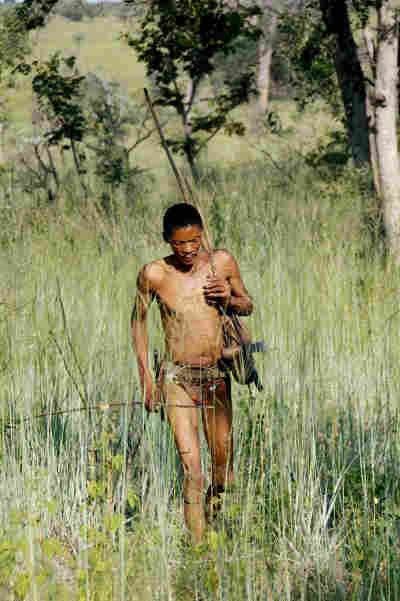
All you need to know right now is that a couple of thousand whites and an equal number of slaves of diverse origins lived in Cape Town. Between Cape Town and the Swartkops River various Quena tribes were located. Beyond them, the AmaGqunukhwebe, a mixed Quena-Xhosa bunch, inhabited the Zuurveld, between the Swartkops and the Fish Rivers. Across the Fish River lay the various kingdoms of the AmaXhosa. Intermingled with all these tribes roamed bands of Kung (the name the Bushmen called themselves), much hated by the Quena, the AmaXhosa and the Dutch, for stealing their cattle.
Only the Quena in the west were familiar with the colonists. Not many of the inland AmaXhosa had ever seen a white man, a horse, or a gun.
The African people on the coast, all the way from the Fish River to Mozambique, had over the preceding two hundred years helped shipwrecked Portuguese, Dutch and English sailors trudging along the endless coastline towards De La Goa Bay. They often took them in permanently.
Survivors who chose to head west along the beach did not live long enough to regret their decision. The Kung invariably murdered them. Best to build a boat and take your chances on the sea route to Cape Town.
The AmaXhosa males were trained from boyhood in stick-fighting. Two sticks were used, one for attack and the other for defence. One English wreck survivor was invited to try his hand at stick fighting but lost his cool when he was repeatedly beaten about the head. He flattened his opponent with good right hook. This was not considered good form.
I know of no connection between the AmaXhosa and the Irish, but the latter have their own form of stick-fighting. It is called hurling. Fifteen men a side play on a rugby field. They are armed with “hurls”, wooden battle-axes, with which they smash the ball and each other. The object is said to be to hit the ball through the goal posts with the battle-axe. On the way, you can kick and handle the ball. Not to mention the opposition. Rugby on steroids.
When I say battle-axe, I am not kidding. I have several in my garage, left behind by a tribe of Irish who invaded Redhouse several years ago when one of them carried off my youngest daughter to live in the wilds of County Cork, amidst much happy carousing.
Hurling has been a major sport in Ireland since about 1200 BC. I am sure they have entire hospital trauma wards devoted to the game. It took until 2010 before the authorities reluctantly consented to players wearing protective helmets. Over 3000 years of constant brain damage finally made an impression. Ireland is a conservative society.
I wonder if we couldn’t recruit a team from the deepest Transkei and enter them in the All-Ireland Hurling Championship. They would soon learn the rules (if there are any) and their stick-fighting skills would be a great asset.
Speaking of the Irish, not only are they great rugby players, they have a game called Gaelic Football. It draws immense crowds of over 80 000 at the finals. The first legal reference to the game occurred in 1308, when John McCrocan, a spectator, was charged with accidentally stabbing a player named William Bernard. Accidentally?
Gaelic Football is sometimes incorrectly associated with Australian Football, or Aussie Rules. This game is played on an oval cricket pitch, eighteen players a side, and the highlight of the game is when someone scores a goal, an umpire wearing a white coat like a butcher, runs to the goal line and extends his arms, elbows to his sides, index fingers outstretched, and yells at the top of his voice, “How long is my dick”! Or so I am told.
Back to 1700, most of the world was more or less at peace, including the Eastern Cape. But it couldn’t last. The very next year, John Churchill, Sir Winston’s famous ancestor, better known as the Duke of Marlborough, arguably Britain’s best general ever, took on Louis XIV of France, who came second by a long shot. Marlborough never lost a battle and only fell from grace because his extremely bossy wife squabbled with Queen Anne. Women!
Down south, the Cape government made a decision which started the total disruption of indigenous society. Trekboers were permitted to travel freely beyond the Colony’s borders.
In 1702 a Dutch hunting party clashed with AmaXhosa along the Fish River. Their attempt at stock theft having failed, they retreated, plundering cattle from the Quena on the way back. Meanwhile, the exodus of trekboers from the immediate vicinity of the Cape began to take off.
In 1713, a passing ship introduced smallpox. Twenty-five per cent of the white population died, but the effect on the Quena in the colony and in the south-western districts was absolutely disastrous. Ninety per cent of them succumbed due to lack of immunity to this strange disease.
Entire tribes were annihilated. The few survivors could not reconstruct their clans as they had lost their chiefs. The empty land was soon occupied by farmers from the Cape.
Amidst this chaos, a group of slaves escaped and attempted to set up a new life up the west coast. They were recaptured. The leader, Tromp van Madagascar, was sentenced to death by impalement but understandably chose to commit suicide in gaol. One guy was hanged, and the rest either had their Achilles tendons severed or their feet broken on the wheel.
Fifteen years later, the Dutch began to take over Quena land and cattle through direct attack. It became the done thing to kill the men and to force the women and children into domestic labour.
In 1734 the Groot Brak River was declared the eastern boundary of the Cape. Five years later, the Quena in the area took up arms in their last stand against the Dutch. They lost, and those still alive were absorbed as unskilled farm labour.
Meanwhile, the Kung began an unending campaign of cattle theft and murder against the trekboers in defence of their rapidly shrinking ancestral lands, which resulted in commandos being assembled to hunt them down.
While the millennia-long way of life of the original inhabitants was being destroyed in a matter of a few decades, all was not well across the Fish River.
In 1730 Phalo became king of the AmaXhosa. He reigned for forty-five years. Two of his sons, Gcaleka and Rharhabe, started a power struggle which lead to a major schism in the kingdom, at a time when the Dutch encroaching from the west required unity of purpose.
There was dissent amongst the whites in the Colony as well. One Etienne Barbier lead a group of unhappy farmers in rebellion against the authorities. For his pains, he was drawn and quartered (entrails extracted, and limbs severed) and his legs and arms exhibited on the main roads as a warning. No wonder Cape Town is such a hotbed of violence.
In 1752 Ensign Friedrich Beutler led an eight-month long expedition as far east as the Butterworth region. On the way they erected a beacon at the mouth of the Swartkops River. When he returned, he reported that the land of the AmaXhosa was way more suitable for farming than the Karoo. An ominous sign for the future. He was most impressed by the Kung rock art in the Fish River valley.
In 1756 the Seven Years War, said to be the first ever “world war”, led to brawling in Europe, the Americas and India. The Brits and the Prussians beat the French and their numerous allies. The British Empire expanded.
The trek from the west was gathering momentum. The Cape government was always a few steps behind the trekboers. Nevertheless, they declared the eastern frontier to be established on the Gamtoos River in 1767. In the same year trekboers reached the Swartkops River, and the first serious clashes between them and the AmaXhosa were recorded. By 1772 there were a number of farmers settled in the Algoa Bay area.
There were several intelligent explorers in the area at this time. Carl Peter Thunberg, a Swedish naturalist, on his second trip to the Eastern Cape in 1773, crossed the Gamtoos River. He recorded two villages inhabited by the Gonaqua Quena, probably in the area of the present-day Woodridge College, plenty of wild animals including buffalo, elephant, rhinos, lions, hyenas, and different kinds of buck. He also describes the salt pans near the Swartkops.
In 1775, King Phalo died and the AmaXhosa split into the AmaGcaleka led by Nqgika, and the AmaRharhabe. Civil war broke out. In 1778 the Cape Colony’s border was extended to the Bushman’s River. In 1780 they made it the Fish River.
Over the ocean, the British managed to lose their American colonies through the sheer ineptitude of politicians, generals and admirals, and major naval and military intervention by the French.
By now, the AmaXhosa were well aware of the trouble they faced from the encroaching white farmers. Attitudes towards whites changed. Whereas in 1686 the survivors of the wrecked Stavenisse were looked after well by the coastal people, the crew and passengers of the Grosvenor had no such luck in 1782. Wrecked on the coast on Pondoland, the 108 survivors had a dreadful time as they headed west. Six sailors were found 118 days after the disaster by a farmer near the future Port Elizabeth.
It wasn’t only human life that was impacted by this descent into misery. In 1770 the area around Algoa Bay abounded in wildlife. By 1820 most of the big game had disappeared, leaving small pockets of elephant in the Addo and Alexandria districts. It is hard to imagine how so few people could have caused so much ecological damage. In the 1930s my father could ride from the farm at Greenbushes to Redhouse on horseback through bushveld. The only human habitation on the way were the tiny villages of Bethelsdorp and Veeplaas.
In about 1970 troops of baboons still roamed the escarpment opposite Redhouse along with large numbers of buck. In 1984 they started construction of the Motherwell township. Very little remains of that wildlife.
In Europe, France was going bankrupt and scene was set for big trouble. So bad that they actually summonsed the first parliament since 1614. Madame Guillotine was to shorten the lives (excuse the pun) of lots of French citizens, including the King and Queen. The last victim lost his head in 1977.
The scene was set for another world war, which would last 25 years and come to a gory end at Waterloo in 1815. All this had a decided influence on affairs at the Cape.
Back to 1779. The scene was set for the first of nine Frontier Wars which would provide much grief and drama before the last one ended 100 years later. Five of these wars took place before the 1820 settlers landed.
When one reads the history of these conflicts, it reminds one of the Middle East. Everybody fights everybody else. Without boring the pants off you, you will be interested to know that in the fifty years between 1770 and 1820, and in no particular order, the following fisticuffs took place:
- The trekboers fought the AmaXhosa and the Quena.
- The Quena fought the AmaXhosa and the trekboers.
- The British fought the Dutch in 1795 and took over the Cape and gave it back as soon as possible in 1802.
- The AmaRharhabe fought the AmaGcaleka. In fact, the battle of Amalinda between these two tribes cost at least 500 lives in the bloodiest clash in AmaXhosa history.
- The British fought the Dutch again in 1806, and this time kept the Cape.
- The British fought the trekboers and hanged them from time to time.
- The British fought the AmaXhosa.
- The British fought the French in a small naval battle in Algoa Bay.
- The Kung fought everybody.
Let’s conclude this sad tale in 1799. The Third Frontier War saw the AmaXhosa and the Quena ravage the land as far as Oudtshoorn. The British built an earthen fort on the farm Papenkuilsfontein at Algoa Bay, probably in the area lying between the present day Korsten and Algoa Park.
Large numbers of Quena and Xhosa warriors attacked the fort in broad daylight on the 10th August 1799, driving off cattle and sheep pastured close by. They headed for Kleinskool with their booty. Meanwhile, a troop of Dragoons had found their horses and charged after them, accompanied by two light field guns. They surprised the enemy enjoying a braai. Forty were killed and the rest fled into the bush.
Remember iClick, buried in Carden Street? Could he possibly have been a casualty?
Just a few days later, on 20th September, the French frigate Preneuse engaged the transport HMS Camel and the sloop HMS Rattlesnake in combat which continued through the night before she broke off the action at 03h30 and fled the scene.
Algoa Bay’s only naval battle. Although if they persist with the proposed fish farm, we might have another one.
Appendix A – who lived where
Around the Cape, there lived the Goringhaicona (Strandlopers), the Goringaiqua (the guys with the war-oxen who killed the Portuguese Francesco D’Almeida), and the Gorachoqua. Across the Berg River the Cochoqua numbered as many as 18000 when Van Riebeeck arrived. Further north the Namaquas held sway, and way beyond them lived the Briquas, probably across the Gariep River.
Over the Hottentots-Hollands mountains lived the Chainoqua, then the Hassequa and Guriqua around about Riversdale. Then came the Attaqua and Houteniqua, near George. Over the Swartberg mountains a large tribe called the Inqua held sway.
Further east lived the Ganumqua, the Nambunqua, the Gonaqua and the tribe closest to the AmaXhosa, the Damaqua, who probably camped between the Gamtoos and Swartkops Rivers. The Damaqua bought dagga from the AmaXhosa and sold it down the supply chain until it reached the Inqua up in the Karoo.
Between the Swartkops and the Fish Rivers the AmaGqunukhwebe, a mixture of Quena refugees and some AmaXhosa, occupied the Zuurberg.
To the east of the Fish lived the AmaXhosa, AbeThembu and the AmaMpondo, stretching all the way to Natal.
Small bands of Kung roamed about across the entire area.