In the last blog, we flashed through 125 000 years of exciting events in three pages. I will try to slacken the pace.
We discussed the possibility of the Phoenicians visiting the Swartkops River, and the panic this must have caused amongst the little band of Bushmen resident in our future Village.
By the Year Dot, approximately 24 generations after this dramatic event, the indigenous population had forgotten all about the Phoenicians and had resumed the even tenor of their ways. Incidentally, there never was a Year Dot. The early monks who dreamt up the Anno Domini method of counting years had no concept of zero, so they went straight from 1BC to 1AD.
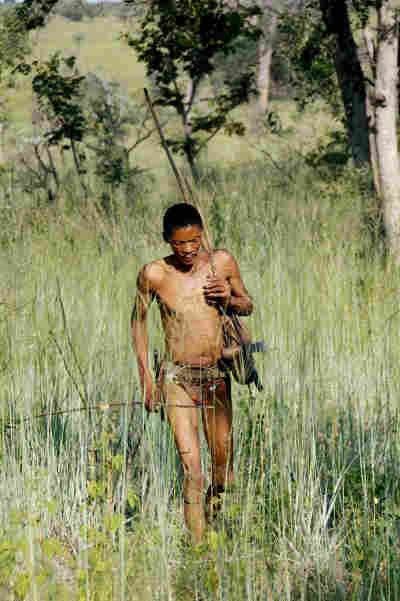
Life was chilled. As long as you avoided annoying the elephants, rhinos, hippos, lions, leopards and buffalo, and didn’t tread on a wide variety of reptiles, you could happily spend all day long eating oysters off the rocks. No champagne unfortunately, but they did drink Karri, a fermented honey mead.
According to legend, they discovered a hollow tree containing a small pool of water, into which honey had dripped from a hive above. It had fermented naturally. When they got over their hangovers, this seemed like a brilliant idea. In due course, different varieties of Karri became available, depending upon the flavour of the local honey, which of course depended upon which flowers the bees visited.
But this idyllic lifestyle was too good to last. People now termed Khoikhoi but who called themselves the Red People, decided to leave Botswana and head south. Two thousand years ago they reached the sea.
Genetically, the Khoi and the San were related. Linguistically both relied on lots of clicks. Genetic studies indicate that 22 000 years ago the Khoisan constituted the largest group of hunter-gatherers on the planet. The San are the descendants of the first Homo sapiens, i.e. modern man. They have the oldest gene pattern of any existing people and it is thought that all other nationalities are descended from them.
But there was still a serious cultural distance between them. The Khoi looked down upon the Bushmen – the name San they gave them means “those who pick things up from the ground”.
The Khoi brought with them cattle and sheep, seriously displeasing personal habits and a bad attitude. They smeared animal fat over their bodies to exhibit their wealth. The richer, the smellier.
The concept of personal property was part of Khoi culture, those with large herds were the rich people, those without worked as servants. Whereas the San were the original socialists. Nobody owned anything of note. And if hungry, they felt zip about pinching a Khoi cow.
Despite divergent lifestyles, the Khoi and the San coexisted and probably interbred once they got to know each other.
Of course, the Khoisan formed the bedrock of the Coloured folk of South Africa. The numerous “click” languages were lost except within those remnants of the San people still found in areas of Botswana, Namibia, South Africa, Angola, Zambia, Zimbabwe and Lesotho. They were replaced by a version of Afrikaans which has to be the most expressive in the country.
It is well known that the Eastern Cape is the home of Black and Coloured rugby. Some clubs have been in existence for over 100 years. I have been to plenty of games in my role as driver of the referee’s getaway car. The ref being Michael, my son. We have been to places I didn’t know existed. You have no idea how popular rugby is out in the bundu!
Imagine the scene at a typical derby between two Coloured teams if the click language had prevailed.
The original is followed by the Afrikaans equivalent, and then the English translation.
The referee to the scrum: “Clack, click, clock” (“Crouch, Bind, Set”).
The spectators, advising the referee:
“Clickity-click”, clickity-click” (”Hy hou! hy hou”). [“He won’t release the ball!”]
“Cluckity cluck!” (“Hy’s omkant! Hy’s omkant!”) [“That player is offside!”]
“Clockity clockity cluck” (“Jy blaas soos ‘n doos!”) [“You are not reffing very well!”]
“Clackity, clickity, clockity cluck! (“Vat jou fokken oë uit jou gat uit!”) [“We advise you to observe the game more closely!”]
Let me come back to the straight and narrow.
For the original inhabitants this was the first of many more intruders yet to come, of which more later.
It is very likely that a Khoikhoi clan took up residence at the site of the future Redhouse. They set up their huts and grew some crops. They didn’t move around as much as the San. They had clay pots in which they stored food and Karri.
They lived in clans on what they considered their tribal territory. Every so often, they would decamp and move to another spot, perhaps in pursuit of grazing for their cattle.
Now, what earthly reason do I have for thinking that the Khoikhoi once lived in Redhouse, you may well ask.
Firstly, their descendants are still traversing the Village with their cattle, fertilising our greenery as they go!
Secondly, it is well known that Redhouse has been the home of hordes of egrets for ever and ever. Every trick in the book has been tried to get the egrets to leave the Village for as long as I can remember. Nets over the trees in which they live. Toy snakes placed strategically on the branches. Loud bangs. Shotgun blasts. Nothing will make them go away.
There are many kinds of egrets, but I guess ours are Bubulcus.Ibis. In Latin, Bubulcus means cowherd. These egrets like ticks. I reckon this is their ancestral home, harking back to the days of Khoi and their cattle. We are doomed to live forever with the incredible mess they make, not to mention the smell.
So what made the Khoi up sticks and head south? It so happens that even further north there was a great stirring.
Probably due to a rise in population, a slow but steady exodus of people began, moving eastwards and southwards out of the area where Cameroon is today, from about 3000BC.
It took them a while but in due course the first of the so-called Nguni speakers arrived in Northern Natal. It wasn’t so much an invasion as a slow advance into new lands looking for fertile soil to plant their crops and water for their cattle.
As the centuries passed, these people comprising several tribal groups collectively called the AmaXhosa, and behind them many more tribes now lumped together as the AmaZulu, gradually filled up the east coast of South Africa.
Their encounters with the San and the Khoikhoi they found in their path cannot have been all that unfriendly. They absorbed some of them into their ranks which is why their language, isiXhosa, contains a few of the original San clicks. Nelson Mandela was of the royal house of the abaThembu, and his DNA test showed that he had Khoisan ancestry.
This gradual southward movement and social interaction between the San, the Khoikhoi and the advancing black tribes was a pretty laidback expedition. Bear in mind that they first entered northern Natal around 1AD, and it took until 800AD before the vanguard made it to the Fish River.
Let’s call it about 1000 km from the northern border of KZN to the Fish River. That’s an average trek of 1.25 kilometres per annum. Even our decrepit railway system moves faster than that!
Several more waves of immigrants followed and by 1500AD the land east of the Fish was well settled.
Elsewhere in the world a huge amount was going on. During that 1500-year period, in Asia, Europe and the Americas, numerous empires rose and fell, major religions emerged for better or for worse, dreadful plagues swept the world from time to time, millions upon millions of people were wiped out by warfare, the Dark Ages descended, China invented paper and gunpowder, eventually the Renaissance enlightened the dismal scene, America got “discovered” and, more importantly for this romantic series, Vasco da Gama made it round the Cape to India.
Where would you have rather been 1000 years ago? Merry England, or the Eastern Cape? Read on!
If you are of European descent, and you could go back 40 generations in your time machine to visit your ancestor, the chances are that you would be absolutely appalled at what you found.
Let’s assume a man of middle age (in those days probably between 35 and 40). By the law of averages he would have been a serf, bound to his master’s land for life. Do you really think you are directly descended from William the Conqueror?
Being a serf meant that his daily grind was dictated by the local baron, who could do with him and his family as he wished. This included handing over his daughter to his lordship on the eve of her wedding day, the so-called droit du seigneur!
When you introduced yourself, shivering in the pouring rain of a typical English summer, he might have opened his gob to reply, and you would have been greeted with a mouthful of broken and missing teeth, seriously bad breath and a hacking cough brought on by the latest bout of plague.
You wouldn’t have been able to refuse his invitation to enter his odorous cottage, made of mud and timber and a thatched roof, with a fireplace in the middle of the single room. Don’t shriek if you see a rat and, yes, that itching really is a horde of fleas.
And please don’t ask to go to the toilet!
However, if your great, great, plenty more greats, grandfather was part of the long, slow migration of the amaXhosa, well, what a pleasure. Hey ho, up at dawn to check on the cattle. That was the man’s job, and he was also in charge of making the Amasi, fermented milk, like yoghurt.
After that was done, and the women were busy tending the crops, making food, looking after children, skinnering and all the other tasks they constantly complain about, well, sit down with the amadoda and discuss affairs of state.
And if the urge is upon you, take a stroll a little way up the nearest kopje, check that no ill-intentioned serpent is lurking in the grass, crouch on your haunches, give thanks for the lovely view of rolling green hills dotted with your fat cattle, the lazy brown river flowing past your kraal, the bluest of skies, and enjoy what is so well described in that most earthy language, Afrikaans, a hearty boskak!
Keep it coming. Your interpretation of the local rugby derby in Bethelsdorp or was it Dustpatch is hilarious!!
Great reading Frank. Glad you have found a way to avoid boredom and divert you from molesting the wife!
Wonderful Frank – if only the history books were like this at school!! looking forward to the next – please.
Once again, a blog worth visiting for the sheer enjoyment of the read – Keep writing them please.
Hi Frank. Thanks for the fun and hilarious bits! It is a great place where we grew up and enjoyed a fantastic childhood. Cheers!!
Franci and Barbara.