The 20th Century dawned midst all the drama of the Second Anglo Boer War. The Boer forces of the Transvaal Republic and the Orange Free State, numbering somewhere between 40 000 and 50 000 mounted and well-armed sharpshooters, backed up by 5 400 foreign volunteers (the Staats Artellerie armed with the most modern guns available) and at least 10 000 black auxiliaries, had taken the offensive against the 13 000 available British troops.
As usual, the Brits were unprepared. Not much seemed to have changed in the mindset of the military authorities since Waterloo in 1815. They got a fat snotklap to start with, but they had three major advantages.
The Boers had no strategic plan, for example tying up large numbers of their people in desultory sieges at Ladysmith, Kimberley, and Mafikeng, thus giving the Imperial government time to reorganise.
Secondly, the Empire had manpower. Eventually half a million British and Empire troops took part in the war, plus 100 000 local black auxiliaries.
Thirdly, they moved the old and bold generals aside and sent in some pretty ruthless dudes to end the war. The capitals, Pretoria and Bloemfontein, were taken within six months, but then the Boers started a two-year long guerrilla war.
The Brits found a solution and it wasn’t pretty. A scorched-earth approach which included herding the population, white and black, into concentration camps, while devastating the countryside, eventually drove the Boers to surrender in 1902. The scene was set for many decades of animosity between Afrikaner and English.
Meanwhile, Queen Victoria flit the scene in 1901. She had reigned for such a long time that all knowledge of how to organise a royal funeral for a Queen and Empress had long since been lost. The funeral procession can actually be viewed in a Pathé “moving picture”. The cortege started off being drawn by Royal Artillery horses. They had been standing still in freezing weather for too long. They kicked off their traces and went home. Prince Louis of Battenberg, grandfather of Prince Philip, husband of Queen Elizabeth II, ordered a contingent of sailors to take over. They pulled the cortege to the cathedral. This started a new tradition, still observed today.
King Edward VII, a merry fellow, took over. Queen Alexandra was most understanding about his girlfriends, of whom there were said to be about fifty-five. One of them was the famous actress Lily Langtry.
He said, “I’ve spent enough on you to buy a battleship”.
And she said, “And you’ve spent enough in me to float one!” Touché!
As at the beginning of the previous century, new technologies arose by the dozen. In 1900 the Brownie camera launched Kodak and the concept of snapshots, and the first Zeppelin airship took to the skies. The following year, the first electric typewriter was produced.
In 1903, the Wright brothers performed the first recorded controlled, powered, sustained heavier than air flight at Kitty Hawk in North Carolina. However, airborne antics had been going on for a lot longer, involving all manner of balloons, airships, and generally disastrous attempts at heavier than air flight.
In 1904, Redhouse was making progress. Proposed by Mr J C Carden, a very active resident as we shall see, the Redhouse Sailing Club was established, but shortly afterwards changed its name to the Redhouse Yacht Club in deference to the Redhouse Swimming Club, which had been started in 1896. We couldn’t have two RSCs for goodness sake!
In the same year, the splendidly named Redhouse Women’s Vigilance Society Committee was formed. Sunday School had outgrown the living-room of Mrs. Chaplin’s home, so they decided to build the Village Hall. The Swartkops Valley Land Company sold them the plot for one pound sterling, and their husbands were touched for the building costs. What a history that old Hall has! It needs its very own blog!
In 1905 Albert Einstein published his theory of special relativity, embodying the famous equation E = mc2. Quite something for ordinary mortals to get their heads around. And then along came quantum physics to really blow your mind!
On the 16th February 1906, the visiting English cricket team played an E.P. XI. The evening’s entertainment was an enactment on the River of the Japanese warships attacking the Russian Fleet at Port Arthur during the recent war. There are photographs showing all the action. J C Carden was in charge.
In the same year, the first Springbok tour of the UK took place; J C Carden was the Manager. Somewhere in the ZRC is a flag he brought back from the Isle of Man, with its unique three armoured legs. JC was a busy man!
Also in 1906, two Zulu clans led by Chief Bambatha, rose in rebellion against a new poll tax designed to drive menfolk into the labour market as there was a shortage due to competition from the gold mines in the Transvaal. 4000 were killed in a one-sided battle of assegais against machine guns. For his pains, Bambatha’s head was cut off and displayed to the public.
In 1907, Myfanwy Gipson was born. Her family came to live in the Village and a few years ago a manuscript was discovered in the archives of the Redhouse Women’s Association, in which she describes life in early Redhouse. Fascinating reading. She lived to the ripe old age of 96, having spotted Halley’s Comet twice in her lifetime.
In 1910 King Edward VII was succeeded by George V. On 31st May, the Union of South Africa came into being. In 1912 the unsinkable Titanic sank with great loss of life.
Then came World War I, a war which appears to have started almost by accident. Approximately 40 million people died. The world was a very different planet after the guns fell silent.
Back in Redhouse, some members who had been on active service against the Germans in South West Africa (Namibia) arrived back before the end of the War and took up residence in the two-roomed Yacht Club building, which was known as Banda Jumbo and soon became the meeting place for the young people of the Village.
Back came the soldiers and with them the dreadful Spanish Flu, 100 years before the current COVID-19 pandemic. Another 50 million people died worldwide. South Africa is alleged to have lost 300 000 in six weeks. To put these losses in context, the world population in 1920 is estimated to have been about 1.8 billion. So WWI and the Spanish Flu removed less than five per cent of humanity.
The Village Hall was one of six special hospitals set up to manage the pandemic in the Port Elizabeth area. Under the watchful eye of Mrs. Sarah Toft and her staff of volunteer nurses, patients were nursed back to health under strict conditions of hygiene, encouraged by Mrs. Toft’s “cure-all” – a daily glass of champagne! To her great credit, she and her team of helpers never lost a single patient.
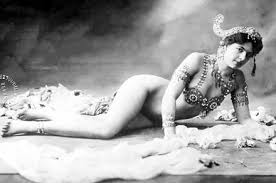
The great tragedies of war and plague gave way to the Roaring Twenties, the era of the Flapper, young girls who smoked in public, drank alcohol, danced at jazz clubs, and practiced a sexual freedom that shocked the Victorian morality of their parents. See the image for this post – typical Redhouse girl!
Not sure how many we had in Redhouse in those days, but the Village has from time to time gained itself a salacious reputation. Long may it continue!
The first reliably recorded shark attack in Port Elizabeth took place at Redhouse on 3rd Feb 1920. Miss Thea Toft, 18, was bitten on the bum by a cheeky fellow. Fortunately, her father, who was close by, jumped in and hauled her out. Her costume was displayed for years in the Port Elizabeth museum.
In the same year, the first aerial photographs of the Village were taken. It is fascinating to see the change in the landscape a century later.
In 1922 the army and air force were called in to suppress striking miners on the Reef. 200 dead and 500 wounded later, the strike was over.
In 1924, the first River Mile took place, and continued annually until municipal ineptitude allowed pollution levels to rise to the point where the event had to be moved to the Sundays River.
A famous tradition started in 1928 (some say even earlier) when Father Christmas came down the River to be greeted by many happy children. This Christmas Eve event takes place to this day and draws many folk from all over the world who return to their childhood playground.
All the fun and games came to an end when the Great Depression broke the world economy in 1929. South Africa suffered but at least had the gold mining industry as a backstop. Worldwide demand for gold grew as stock markets crashed.
In 1930 Redhouse received electricity, in the form of a diesel generator which was eventually replaced by municipal power. I understand that the original generator was redeployed to a house built on the beach at Laurie’s Bay.
During September 1934, the Council decided to build a road linking Redhouse and Zwartkops. Before that you went to town via Veeplaas. In 1936 the Benevolent Society came into being to provide for the poor and needy from the nearby townships. Its work continues.
In 1939 a site was granted for the erection of a church on the west side of the Hall and a building fund was started. However, World War II intervened and building only started in 1952, the first service at St Nicholas being held on June 7th of the following year. The patron saint of children and of sailors, St Nicholas was an appropriate choice for a village with plenty of both!
Many men and women went to war and some didn’t come back, others were knocked about a bit. The Village ticked over until the end of the war.
In 1945 the troops began to return and then the fun started. Nobody had much money, but they all seem to have had a merry time; babies arrived in droves. Lots of people stayed at the Sanitorium, known locally as the Sanny, the old hotel where a new castle has emerged out of the septic tank, the last remnant of the old building.
The present library was a shop in those days, owned by Valayden from Veeplaas. Once the Nats took over, he lost the shop. Long before that, the library was housed in the Hall, in the little storeroom on the north side.
I have always imagined that septic tanks were in operation from the time of the first houses being built. But it is only in the 1950s that they became a regular feature. Before that, a coloured gent called Roman operated a bucket system. He would collect them in his donkey cart. Where he deposited the contents, I have no idea.
In the general election of 1948, Jan Smuts lost to the National Party and the Apartheid era began to take shape. It is interesting that his friend Winston Churchill also lost an election at the end of the war.
In 1950 Jan Smuts died. A most amazing man. From Boer Kommando leader to Field Marshall in the British Army, the only person to have signed the peace treaties for both WW I and WWII, a founder of the League of Nations, the list of his achievements goes on and on. What would he think of the clowns running the world at present?
In 1959 the Redhouse Primary School moved out of the Village Hall into the new building. There were only four standard five (grade 7) kids that year. Today over 400 kids drawn mainly from Motherwell attend the school.
In 1960, the white electorate voted in a referendum to form a republic. The vote was very close indeed with a 90% turnout. Just over 52% voted in favour. The following year the Union was dissolved, South Africa left the Commonwealth and the Apartheid experiment began in earnest.
Meanwhile, back in 1953, the Zwartkops Rowing Club built a bowling green on what had been an orchard fifty years before. Not quite as old as the green in Southampton, first used in 1299.
Every weekend, the ancient “white ants” put in their tabs and bent their hoary heads over the mat before they urged their wobbling balls at the faraway jack. At the end of a long afternoon, piles permitting, they staggered into the main bar, by then overpopulated with golfers and yachtsmen. The bar was hectically busy! All the fun happened on Sundays in those faraway days, I am not sure how much work got done on Mondays.
Bowls was a serious business and various brave men took on the role of greenkeeper. Maintenance of the green is a demanding job by all accounts and involves scarifying, mowing to an exact measurement, dealing with floods and droughts, and begging for money.
None of the greenkeepers at the ZRC died of a heart attack while in office, so they were obviously unaware of the nocturnal assistance in rolling the green provided free of charge by the lusty young (and sometimes not so young) folk of the Village. “Jack’s up” took on an entirely different meaning at night!