Going to school by train


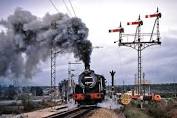
Nowadays ugly, oblong, orange diesel engines wail their way through the ancient Village of Redhouse and the dogs howl in concert. Most unromantic compared to the coal-fired trains of yore, hissing steam at every pore, their high pitched whistles and fiery fire boxes thrilling small boys up and down the line. We should also mention the clouds of black smoke that deposited flakes of coal dust all over mother’s washing on the line. So perhaps they were not universally popular.

My first memory of the Railway Station with its sign that declared Redhouse to be 17 feet above sea level is of a disastrous encounter with a tin can of boiling water intended for the gardener’s tea, which I managed to upset all over my left foot.

I screamed blue murder, the Station Master poured blue ink over the burn, and I was carted home to bed. Mrs. Bleksley, a nursing sister and sister-in-law to the famous Arthur Bleksley of Springbok Radio’s Three Wise Men team, would come around to dress the wound. Eventually I recovered my four-year old dignity and proudly bore the scar for many years.

Ten years later, my life was still intertwined with trains. I regret to say not always as innocently as my first encounter. On the northern border of the Village lived two pretty girls, a magnetic attraction to teenage boys. One dark night, frustrated in our attempts to gain access to the girls, we removed an avocado or two from their garden, and lay in ambush close to the railway line.

In due course, the Uitenhage train came thundering along. In those days, the driver or his assistant would lean out of the cab window, holding a hoop to which was attached a “tablet”; the idea was that the station master would have another hoop with a tablet for the next section of line. Both men would extend the unoccupied arm to collect the other’s hoop, sometimes delivered at a fair speed, no doubt a bruising encounter.

On this occasion, we waited for the right moment and hurled our avos at the innocent head of the engine driver and then fled for our lives. Just one of many incidents suffered by the SAR & H since the first Puffing Billy came through in 1875.

Grey boys and Collegiate girls caught the train to Port Elizabeth and at about the same time every morning Muir boys and Riebeeck girls headed for Uitenhage. We had season tickets which were clipped by George, a tall conductor with the patience of a saint.

Given that there were about 200 school days per annum, I must have travelled up and down the line about 2000 times in my time at Grey High. The train stopped at Swartkops, New Brighton, Sydenham, North End and finally at that Victorian edifice, the Port Elizabeth Station. Wherein was a miniature steam train in a glass case, which would run if you put a penny in the slot.

It also had a bar; one if its denizens decided that Collegiate girls were on the menu and found three of them in a compartment; they managed to escape his very obvious intentions and the next time he tried his luck a posse of police took him away.

When we disembarked each morning we boarded a bus which travelled very slowly up Russell Road and eventually disgorged us in Cape Road at the bus stop near College Avenue.

This bus – I wish I could remember its route number – carried not just schoolboys but large numbers of people en route to work, mainly women. One fine day, a Junior Grey boy, one Darryl Paine, well known in the Village for his collection of venomous serpents in glass bottles, mostly dead, was sitting in the front row of seats in the crowded bus.

He removed his cap, and moving in a circle around his head was a snake. The uproar was instantaneous, panic stricken passengers rushed the exit and the bemused driver brought the bus to a halt, not to mention the traffic. What the final outcome was I cannot recall.

Standard six boys sometimes had to wait until quite late in the day before a field became available for rugby practice. The Redhouse boys would sometimes have to run like the wind down Mount Road to reach North End station before the train got there.

In those days, just like these days, the country bubbled with discontent mostly, but not always, below the surface. There was a time when the trains would rush through New Brighton station at full speed, as the locals were inclined to vent their anger by throwing rocks at the carriages.

It so happened that during one of these unhappy periods, I got home very late, on the 8pm train. It was a Tuesday and I was in cadet uniform. (We wore khaki caps, not the blue berets worn so horribly incorrectly by present day cadets, so that they resemble trainee pastry cooks). Possible I was late due to being put on extra parade.

My dear mother listened with wide and glistening eyes as I told her how the townships had erupted and the only troops available were the Grey Cadets, and we had been in battle the whole day long. My heroic tale was brought to an abrupt end by my grandmother, who had lived through WWII, WWI and possibly the Napoleonic wars as well. She gave me a clip around the ear and sent me on my way.

At one stage normal carriages – those with lots of doors and metal signs saying “moenie op die trein spoeg nie” were replaced with the mainline equivalent, those with entrances at both ends, and compartments for six people.

One day on the way home cousin Louis managed to lock us in the compartment and George the conductor couldn’t get in to clip our tickets. The door was well and truly locked. When we got to Sydenham we all had to crawl out of the window and be re-seated elsewhere. This might have been just one of the occasions when the Railway Police visited my uncle to complain about his son’s behaviour.

These mainline compartments were built for trouble. Nearing home one afternoon we tied ropes, or quite possible his school tie, around Patrick Kohler’s ankles. When the train stopped we shut the compartment door and left him to his fate. The train was gathering speed in the direction of Uitenhage when we saw Patrick hopping like large ginger rabbit towards the exit; his subsequent arrival at full length on the concrete platform was greeted with howls of mirth, but not by the station master.

These tales could go on and on, but I leave them to your imagination. Steam trains were a special part of our growing up and I live in hope that one day we will see them on back on the track. After all, they don’t need Eskom!

Three and a Half Rugby Games or Caught in the Crossfire

Saturday 7th April 2016 – off to the chaos at Hobie Beach to watch the Wobbly Goblin swim and cycle, and Pudding the Pirate run in the Corporate Iron Man.

This event is a scaled down (one tenth the distance) of the actual Iron Man event which followed on Sunday. They did very well and we all enjoyed a hearty breakfast at the Boardwalk, very welcome!

One hundred thousand spectators were expected for the real deal; a trip to Joubertina in the Langkloof for a quiet Sunday lunch might have seemed a more attractive proposition for some.

Then home to prepare for the next adventure, a trip to Despatch Rugby Club to watch MKC ref the First Reserves against Suburban’s team.

We got to the large concrete stand, covered by an extensive roof designed to keep out rain, which I’m sure it does on those rare occasions when rain finds Despatch; it is also cleverly designed to allow the hot autumn sun to flood the seating area in such a way that spectators either bake like potatoes, or retreat into the upper south-westerly corner’s ever diminishing shade.

There is a much more attractive area next to the stadium where club members hang out; it also has a bar.

On this occasion, the right hand side of the stadium was occupied by Suburban supporters, inhabitants of the so-called Northern Areas of Port Elizabeth, a gangster ridden part of town where over 100 people have been murdered during the last two years; unemployment, the drug trade, and the shocking state of education are probably key factors driving this situation; as you can imagine, anger simmers not far below the surface of ordinary citizens’ skins. Now add the availability of liquor at the stadium. Petrol on the fire. Of this more later.

When the second team game finished, the Suburban players formed a tunnel and clapped both teams onto the field. A nice touch.

The first reserve game started and I climbed the concrete mountain and found what shade I could; I must admit it was a great vantage point to view the game, which was of excellent quality.

Watching a son play rugby is different to watching him referee the game. Suddenly you are forced to follow the play more closely and to question the ref’s decisions; I must admit my knowledge of the rules has improved substantially. I now realize how little the average spectator knows about the finer points of rugby.

Apart from a yellow card for a high tackle and red card for a deliberate punch to the head, which left the Despatch outfit depleted but still in control, the game was exciting to watch, and the ref handled it very well.

That game finished at about 15h30, the hot sun ensured a steady flow of grog into the visiting crowd, and the first teams ran onto the field. Our lad and the referee from the second team game acted as touch judges.

Despatch has an excellent first side, and the visitors were no match for them; this of course, did not please the visiting spectators; in particular, one gent wearing glasses and slip-slops and a blue shirt caught my eye. He very deliberately set about provoking a club official trying to maintain order at the entrance to the fenced-off playing area. He also chirped at the referee, and was obviously intent on causing trouble.

Half time came and this guy disappeared into the crowd, where no doubt he had several more beers.

The one-sided game had been enlivened by a yellow card given to a Suburban player for calling an opponent a “boer”. Now that might not sound like much, but the referee – incidentally a coloured man – said “if this white player had called you a “kaffir” he could be prosecuted and jailed; why should you be allowed to get away with calling him names in an offensive manner? Off you go!” Another nice touch.

Once the second half got going, our friend of the blue shirt reappeared and set about his evil task of provoking the security official, who had meantime moved to the juncture of the main stand and the members’ area.

With about six minutes remaining in the game, all hell broke out. Blue shirt and his mates engaged in battle with the security guy and his friends. Suburban supporters rushed down the stands two large steps at a time to join the fray; empty bottles flew overhead and around my ears and exploded in showers of glass in the battle area.

I was in no man’s land, observing with amazement the speed at which Suburban reinforcements rushed headlong down the stadium with no regard to life and limb. On the field, the referee had called off the game and players and officials looked on in astonishment at the battle across the fence.

Meanwhile, our lad the linesman was frantically searching the stands for signs of his aged father; he was much aggrieved to see me laughing at the fun; I was summonsed onto the field to the relatively safely of 30 burly players. This took time, as I descended slowly down the large steps, holding onto the rail, in case I tumbled to the bottom.

As the battle subsided, the players from both sides went into one joint huddle; the Suburban supporters rapidly left the stadium, no doubt fully aware that the Despatch police were on the way.

I reflected upon the thin line that separates Love and Hate in South Africa; on one side of the fence, coloured people fighting with Afrikaners; on the other, the same race groups in a huddle together after ninety minutes of bashing each other with great enthusiasm on the rugby field.

It was quite relaxing in the Nelson Mandela Stadium – definitely the best looking stadium in the country – where the Kings hosted the Bulls; very civilized, in fact. No brawling, no flying bottles, no exploding glass grenades; probably quite boring for certain segments of the population.

My friend Andy from Chintsa had come to stay as he was due to watch his son tackle the real Ironman; when old friends get together after a long time, and aqua vitae is to hand, time flies; I think he got to bed at 02h30 and had to be up before 06h00 to get to the beach front! Dutiful father!

Sunday dawned, mostly windless. The forecast was for 15 knots south east at 17h00. The Redhouse Yacht Club authorities dictated that the race to the Islands would take place, but would start late to allow the tide to flow sufficiently to at least cover the prawn holes.

So off I went to set the convoluted course required for the Island Cup. We got tangled up in only one fisherman’s line and managed to extricate ourselves without harm; I really didn’t want any more flying bottles!

Racing at RYC is dictated by the infamous bridge crew; I researched collective nouns for old ducks; the best I could find to describe this lot is a Badling of Ducks. Considering that they open the wine as soon as they arrive (say Midday) if not before, and the race actually started at about five minutes to four, you can imagine the devastation caused to those aged, well punished livers after four hours of steady toping!

The evidence was there to see; boats were told to leave at four minute intervals, in groups to which skippers were allocated on the same basis that South Africa political parties allocate people to their proportional representatives lists – in other words, following a logic beyond the ken of sailors or voters.

Flags went up and down with the usual noise, and amazingly enough the confused fleet set off more or less in the intended order, against the rapidly flowing tide and a light to medium south easterly.

Racing was really interesting, and many decades of guile in navigating the River in these conditions found yours truly ahead of the fleet – but only just because the two centenarians in their very fast and overpriced Finns were quite confident of catching the Laser.

I got to within about 30 metres of the weather mark and the dwindling breeze dropped to nothing. Peace descended; silence reigned; I observed the bank sliding forward; I was going backwards with the tide.

The RYC rescue boat hove into view and told us the race had been abandoned; we turned for home and began the long drift upstream; meanwhile, the rescue boat crew picked up the marks and then covered themselves in glory by missing the now flooded main channel and motoring up the Chatty River by mistake.

As the old poem says “The sun went down and the stars came out far over the summer sea…”. In fact, drifting at sunset on the River is an experience not to be missed. A camera would have been in order.

And the tide was due to turn at 19h00. The rescue boat eventually turned up, aided by two other boats from the Village, and in due course we all got towed home, our tails between our legs.

And there wasn’t a tot of grog left in the Club House!

The Poo Tsunami

zc3

SEWAGE INFRASTRUCTURE BUCKLING UNDER YOUR LOAD 

The waste water infrastructure servicing the Nelson Mandela Bay municipality appears to be in the process of collapsing.

There has been much publicity concerning the latest sewage disasters to strike the area; these include:

  • numerous breakages in the sewers running down to the Fishwater Flats Waste Water Treatment Works from the massive Motherwell Township, resulting in 30 mega-litres of raw sewage flooding the Swartkops River every week over the November – January period;
  • raw sewage running through Swartkops Village to the extent that the municipal slipway at  Tiger Bay had to be closed;
  • the recent eruption of sewage opposite the entrance to Fishwater Flats, which formed lakes of foul water on both sides of the M19 at the John Tallant crossroads, before finding its way into the Swartkops;
  • allegations of raw sewage flowing into the sea from the Papenkuils canal;
  • allegations of raw sewage escaping into the Baakens River;
  • evidence of untreated sewage being pumped directly into the sea from Fishwater Flats – yachtsmen report sailing through poo when venturing close inshore, and there are said to be aerial photographs of the waste water pouring into the sea;
  • frequent spills into the upper Swartkops River from the Kelvin Jones sewage works in Uitenhage.

However, comments from concerned citizens in the social media reveal that there are probably a lot more streams and ponds in the Metro that suffer from sewage leaks and other forms of toxic wastewater.

All the evidence points to an aging infrastructure buckling under a volume of sewage for which it was never designed.

It was stated that the upgrading of Fishwater Flats, currently underway, would provide capacity to handle the expected increase from existing sources for the next forty years i.e. capacity is reached in 2050.

But there is a currently a plan afoot to create an entirely new sewer system running from the Northern Suburbs into Fishwater Flats; this rings all sorts of warning bells.

If Fishwater Flats only has capacity to handle the current load until 2050, then a massive new sewer system is most definitely going to reduce that capacity considerably.

Heavy rainfall results seems to increase the flow entering Fishwater Flats and, inevitably, the excess is pumped into the Bay along with raw sewage. A new sewer system is going to increase storm water volumes.

It is the height of ecological folly to pump raw sewage into the Bay whenever the volume is too great for comfort, just because you can.

It seems obvious that Fishwater Flats has a finite life, under the best of circumstances.

There are however, other dangers which should be considered.

The Metro has already released information about so-called “set-back” lines, which take into account a one metre rise in ocean level over the rest of this century; according to National Geographic, this could be a conservative estimate; recent studies indicate a rise of between 0.8 and 2 metres; if the Greenland Ice Sheet melts entirely, expect seven metres.

One metre doesn’t sound particularly alarming right now; after all, that’s only about 12.5mm every ten years. Not that there is any guarantee that the ocean will rise at this gentle rate without throwing a wobbly from time to time.

On at least two occasions during the last twenty years the N2 running past Fishwater Flats has been closed while storm debris has been cleaned up – sand and stones flung across the road by waves breaking over the dolosse.

You may remember the event in September 2008 when waves broke over the sea wall near Sidon Street and ran into Paterson Road.

There is a strong probability that at some stage we are going to experience a storm surge that will breach the N3 barrier between the sea and Fishwater Flats, which is a mere 300 metres from the shoreline.

What happens when the sea decides to retaliate and pumps salt water back into the treatment works?

Perhaps the architects of the Fishwater Flats idea may be forgiven for their lack of vision; fifty years ago environmental conservation was not top of the list for town planners; pouring poo into the sea was common all over the world – it still is; and they obviously did not foresee a massive increase in population.

Even less could they have foreseen a situation where the local authority responsible for maintenance would be stripped of expertise for political reasons, resulting in a maintenance regime which has to rely on private contractors operating in what appears to be a permanent climate of crisis as they battle to plug the holes in aging sewers.

Port Elizabeth is not alone; all around the world cities are sinking in excreta as aging infrastructure crumbles; that gives us no excuse to avoid dealing with our own problem.

What it does give us is a marvellous opportunity to rebuild our sewage infrastructure using the most modern methods.

Imagine a situation where we have a number of modern waste water plants developed using the Nereda technology which has been implemented so successfully at Gansbaai and Wemmershoek in the Western Cape?

This modern system is making inroads all over the world; the treatment plants take up less space, use a lot less energy and construction costs are around 20% lower than old fashioned plants.

Imagine a situation where a number of such plants were established with the metropolitan area, situated inland and well away from our rivers and streams.

The advantages include:

  • lower maintenance costs as each plant would service just its section of the Metro, thus avoiding lengthy sewer lines and the pump stations necessary to prevent expensive blockages
  • grey water recovery for agriculture which could be established close to the plants; we are after all a water scarce country
  • a boost to our construction industry
  • generation of energy from methane produced during sewage treatment
  • creation of agricultural jobs in the farming clusters close to the plants
  • the salvation of our rivers from their present seriously endangered state
  • a pristine Algoa Bay, free from manmade pollution.

The perils of not addressing the problem include:

  • Greater incidence of disease amongst the population, particularly those exposed to streams of sewage; cholera, typhoid and dysentery are just the more obvious results of contact with untreated sewage
  • Increasing incidence of infrastructure failure, resulting in ever increasing maintenance costs;
  • The final destruction of our rivers
  • Increasing pollution of Algoa Bay, making a mockery of its position as a “Hope” spot as recently aired in the Press

Not to mention the curses of future generations on the souls of their forefathers for leaving them in a veritable “s***hole”!

No doubt the question of funding will be raised; the answer to that question is “Never confuse Principle with Cost”.

We do not have the right to leave an environmental disaster to the care of future generations.

We do have the responsibility to fix our problems before they become someone else’s.

Let Nelson Mandela Bay become an example to the rest of Africa on how to handle a very smelly problem.


The Skeleton

Early in 2014, a team of diggers, some of them mechanical, dug trenches in order to lay new power cables; eventually they got to Carden Street.

Carden Street is the longest road in the Village and is famous for being named after Cecil Carden, manager of the very first Springbok team to tour the British Isles and France.

It is also famous for leading to the Zwartkops Rowing Club, where you will find an ancient flag brought home from that tour and plenty of cold beer.

A hundred metres north of the ZRC, there is a sub-station, one of three in or on the outskirts of Redhouse. Why our little village of 100 houses needs three I have no idea, but they do guarantee that we don’t suffer from Eskom’s rolling blackouts.

Carden Street runs past the sub-station on the right; on the left, a thin strip of grass separates the road from the railway station’s protective palisade fence.

When the diggers arrived opposite the sub-station, the plan was to dig a hole on this grass strip, and another one on the sub-station side of the road; then they would burrow horizontally between the two; eventually they would dig the final stretch of trench up to the sub-station; we waited eagerly to see what the bees who live on top of the building would do to the diggers.

But that piece of drama was replaced with something way more exciting! The mechanical digger took a bite out of the earth and, to the consternation of its human friends, there sat a skeleton!

Soon a small crowd of Villagers arrived to see the fun – mostly comprised of those idle buggers who have no work to do and cycle about on a permanent weekend.

Of course, skeletons are a police matter; eventually they did arrive, not always something you can count on as a certainty, unlike an Eskom outage.

A cordon of tape was erected, the nosey inhabitants shooed away and no doubt a forensic team took fingerprints.

But the crowd had seen enough to report that the skeleton was of slight build, was in a sitting position and had a bullet hole in the skull.

The skeleton was taken away, there were no immediate arrests and digging resumed.

I volunteered to find out more from the police; I asked for a case number; my plan was to visit the coroner or whoever is the custodian of unknown bones, and ask for a DNA check on our Village skeleton. Needless, to say, this project is still ongoing, but I have not given up.

Meanwhile, there is no harm in speculating, as Sherlock Holmes would doubtless have done.

Firstly, even in Redhouse, where wives are more troublesome than usual, it is unlikely that a murderer would chose to bury his victim next to Carden Street, which is busy enough to make grave digging risky even at the dead of night.

In any case, the River provides a much more convenient method of disposal, and fingerprints are soon obliterated.

So, reluctantly, we can probably ease up on investigating current Villagers; we really don’t want to find out more than we already know about some of them.

I did some research on burials amongst the San and the KhoiKhoi; it appears that only sometimes do the San bury the dead in a sitting position; this is more common amongst the latter group; what is interesting is the account of a skeleton of a young female found two years ago at Plettenberg Bay; also slight, and found in a sitting position.

The remains were analysed at the University of Cape Town, and said to be between 500 and 1500 year sold – but perhaps much older –  although definitive results are awaited from DNA tests being conducted in Canada.

Apparently, burials took place not far from encampments, which generally moved away after the ceremony.

From this we may deduce that our skeleton belonged to a KhoiKhoi group that lived at the River many years ago; perhaps on the site of the ZRC, from where there is a beautiful view, upstream and downstream.

But what about the hole in the skull?

The Third Frontier War (1799-1803) was a confused affair which included a number of Xhosa and KhoiKhoi tribes living between the Sundays and Gamtoos Rivers, Dutch trekboer communities and the lately arrived British, who were puzzled by the situation, to say the least.

There were temporary encampments of Boers and KhoiKhoi near the Zwartkops River during this period and it is known that the British had to keep them apart to prevent fisticuffs.

Then the Brits gave the Cape back to the Dutch and withdrew the garrison from Fort Frederick and sailed away, probably very grateful to be out of that mess; when they left they handed over quantities of stores to the KhoiKhoi who had settled at the Bethelsdorp mission station.

Other KhoiKhoi decided they wanted some of that and brawling broke out; the northern townships of Port Elizabeth haven’t changed much in 200 years.

Then the Boers decided to burn the Bethelsdorp houses; Fort Frederick was full of refugees; it is not unlikely that fighting also occurred in and around the future Carden Street.

Perhaps our skeleton was victim of this period.

But it is quite probable that KhoiKhoi people lived happily next to the River for hundreds of years before that; it is also very likely that early Portuguese sailors would have sailed up the River to hunt game, do some fishing and to find water and salt; and after them came an endless stream of Dutch and English East Indiamen, not to mention pirates en route to the lucrative East Indies.

So our victim could have been done to death by musket shot at any time from the late 1400s until say 150 years ago.

But until we get a forensic report nobody can say whether or not the hole in the skull was caused by a bullet; it could have been a well-aimed arrow or assegai or even – and here we admittedly do enter the realm of the less probably – a Phoenician spear.

Around 600 BC the Egyptian Pharaoh Necho II organised Phoenicians – excellent sailors – to travel around Libya – as Africa was then named – from east to west. They apparently stopped twice to grow crops and refurbish their ships; they may – just may – have decided that sheltered Algoa Bay and the wide and inviting Zwartkops estuary were just the spot for some rest and recreation.

Having rowed up the River they would have spotted an encampment on the site of the future ZRC; beached their boats in anticipation of ice cold beer; been bitterly disappointed at being told that the pub was closed on Sundays; this lead to forced entry, resistance by the locals and finally, a burial.

When I find out the truth I will let you know!


Cultures in Conflict

Genetic science holds that modern man is the end result of a single happy moment during the march of evolution when the ancestral mom and dad (Homo Erectus?) became responsible for a lot of school fees.

How many thousands of generations back this event took place is open to debate; working on an average of 50 generations per millennium for say half a million years, that’s 25,000 great grannies.

Discoveries during the very recent past have complicated the issue; apparently about 20 percent of the Neanderthal genome survives in modern humans of non-African ancestry; Neanderthals had bigger brains then modern man, some had red hair and blue eyes, and they behaved pretty much like their cousins, so-called modern man, i.e. badly.

Recently, DNA taken from a little finger bone found in a cave in Siberia identified a new type of early human; these Denisovans were different to Neanderthals, and people in Papua New Guinea carry some of their genes.

Not to mention the hobbit-like race of humans who survived until about 12,000 years ago in Indonesia. In fact, related specimens might still survive deep in the jungle according to local myths.

Whatever happened from a biological viewpoint pales into insignificance compared to the differences in culture which arose over such a vast spread of time.

It is very difficult to recreate the mindset of people who lived even half a century ago. Hey, that’s me!

I write this while looking at a lovely view of the Hauraki Gulf upon which the first world city of Auckland lies.

I can check my e-mail, bank balances, newsfeeds and social media. I am just about as connected to my day-to-day world back in South Africa as if I was physically there – you actually have to make a decision not to stay in touch if you really want a complete break.

In 1964, radio broadcasts spread the news but information from SA was probably sparse; type-written letters arrived after a three week ocean voyage on a diesel powered mail ship.  In 1914, it took a while longer as ships were slower, coal-fired steamers. In 1864, the post travelled on lovely clippers which raced across the Southern Ocean with acres of canvas set. In 1814 Auckland didn’t exist.

We have a totally connected globe – the technology is brilliant – and it gets better all the time, exponentially.

I can speak to my family in four different countries in both hemispheres simultaneously – and as we come from the same family, and therefore share the same culture, it is as if we were all in the same room.

But – we can physically be in the presence of people from different cultures, and immediately we bump into barriers.

The Maori in New Zealand arrived in New Zealand about 1280 AD; once they had wiped out the indigenous wildlife they discovered that life was hard without free food; their society evolved into  groups of extended families (whanau) living in villages for mutual protection; these villages eventually formed part of a clan (hapu) of inter-related families, which in turn belonged to a tribal group (iwi); after the mayhem which ensued upon the arrival of large numbers of British emigrants, all parties settled down more or less amicably and they all swear allegiance to New Zealand as a country.

In South Africa the situation is much more complicated.

We identify with our families, then our close friends, and at the next level up with our official race group (as recorded by the democratic government of South Africa, proud owner of the world’s most advanced constitution, specifically designed for a non-racial nation).

But we can also be defined by the rugby franchise we support (in the case of at least two of the official language groups) or a soccer franchise (for the rest of the tribes); loyalty to the country generally only surfaces when national sports teams are playing, although in the case of rugby, large sections of one particular race group shout for the opposition due to the enormous chips they carry on their shoulders.

Then we have the economic divide, which can be broadly defined as the super rich, the middle class, and the vast masses of unemployed and unemployable living in the townships and rural areas.

The super rich have the means to skip the country when the latter finally rise in revolt a la France in 1789.

The middle class wishes it had.

And Ju Ju– the latest in a long line of African rabble rousers – waits in the wings to lead the revolution which will take the evolution of South African society to a new low point.

So why is it that when people of different cultures are drawn together, there are some fundamental differences that – language barrier apart – are very difficult to detect, understand and assimilate?

Different cultures appear have some basic differences in their value systems.

For example, how did the concept of land ownership develop in Europe and Asia but was absent in many indigenous societies?

The answer must surely partly relate to population density; if you have a whole continent to roam about in, e.g. a few thousand Aboriginals in the vast outback of Australia, the concept of personal ownership would be meaningless; whereas in the crowded slums of Europe and the countless paddy fields of China, the little patch of land that was all you had to sustain you and your family, would be most jealously guarded.

Fast forward to the 21st century – the 7 billion strong population of the world is many times more than the Earth in its natural state can support.

But so far, modern technology has kept up the supply of food at affordable rates, except that from 2002 food prices began to rise in real terms.

The real problem we face today is the provision of sufficient food and water to an ever increasing global population – which of the different world cultures is best equipped to handle this impending crisis?

The answer must surely be, the culture with the best work ethic.

There are lots of cultures with healthy work ethics; across Europe, Australasia, the Americas; some are stronger and more organised than others; but in general, when faced with a major threat, these cultures will react by taking steps to counteract the danger; they may lose casualties in the battle, but they will give it their best shot.

Then you have Africa; and offshoots like Haiti.

The following observations will, of course, be branded racist; if that is your immediate reaction, try to see through the veil of political correctness, and prove them wrong.

African culture does have a work ethic; individual Africans have demonstrated brilliance in many fields; but these commendable efforts seem to be the result of individual initiative, perhaps backed by close family support, and exposure to Western education and culture.

African workers – when left alone by the parasitic unions to which too many belong – work well when led well; but in most cases, the leaders are non-African.

A good example is the current Ebola pandemic; doctors and soldiers from the Western world are flown in to counteract the threat; what would the death toll be if the crisis had been left to Africa?

The vast majority of Africa’s people appear to remain immersed in an age old culture of “subsistence existence”, to coin a phrase.

Working hard and working smart is not seen as a viable route to riches; the rule seems to be, “if you can’t take, break it”; thus corruption hangs like a pall over the continent; a fine example is surely South Africa, which is headed inexorably down the same road as Zimbabwe.

How is it possible that this country, armed with the world’s finest constitution, ends up after twenty years of “independence”, with a President who gets away with stealing the equivalent of the United Kingdom’s annual aid to SA to fund his homestead, and an education system ranked 133 out of 142 by the World Economic Forum?

SA’s future is being plotted by politicians without vision beyond their personal bank balances; when the crisis comes, will they have a plan to provide food and water to the helpless millions in the townships? Judging by the recent water “outage” in Gauteng, I seriously doubt it.

So enjoy a beer while you can!

The Ruffians Game

In 1531, Sir Thomas Elyot wrote that “Footeballe is nothinge but beastlie furie and extreme violence”.

Before William Webb Ellis picked up the ball and ran with it, there were many brands of football; rules were few and differed from village to village; there are old engravings showing players handling the ball; a crude form of rugby had been played for centuries in England and probably elsewhere before WWE achieved immortal fame.

Sir Thomas would not change his mind if he could watch a modern game of rugby; the “beastlie furie” is mostly under control but extreme violence is part of the game; as a normal citizen, can you imagine being tackled by the likes of Bakkies Botha or Willem Alberts? It quite possible you might die on the spot!

Rugby players are tougher than ever but still seem to spend large portions of their short professional lives on the side lines through injury. And they only have about fifteen years at most to practise their trade and to build up sufficient funds to support life after rugby.

And life after rugby could last a long, and painful time.

An ancient Scottish verse sums up the “beauties of football” pretty well:

Bruised muscles and broken bones
Discordant strife and futile blows
Lamed in old age, then cripled withal
These are the beauties of football.

In 1845 rules were published based on the game played at Rugby School and have been evolving ever since.

Of course, in these modern times football is just that, aka soccer, the game played by more sportsmen and women than any other – although I think lawn bowlers might be in with a shout, there seem to be loads of “white ants” in the world.

Modern football was formalised when the Football Association came into being in 1863;  the so-called “beautiful game” is a demanding sport in which acting talent is mandatory, required for “diving” when the opposition comes too close, and dramatic sliding across the turf on those rare occasions when a goal is scored, and of course the jumping all over each other immediately after the slide;  sometimes tempers flare and the players bite each other; this has led to calls for players to be allowed to carry their kit onto the field as flailing handbags are more in keeping with the spirit of the game.

There is an old saying about rugby and soccer: “Football is a gentleman’s game played by ruffians, and rugby is a ruffian’s game played by gentlemen.”

Rugby developed into two codes; in 1895 rugby league broke away from rugby union over the question of payments to players; 100 years later rugby union finally came clean and declared itself professional as well.

Rugby union is played in 100 countries; in South Africa we are well acquainted with the top dozen international sides as they feature on TV frequently; a little known fact is that 94 countries actually competed to play in the 2007 Rugby World Cup; we just didn’t get to see the qualifying matches.

The All Blacks were on the cusp of breaking the 17 consecutive international wins record held by NZ and SA but were held to a draw by Australia in August this year; and of course the Springboks beat them last week to finally put paid to an 18 game unbeaten run; but in fact that record had been broken when Lithuania beat Serbia in 2010. One wonders what language the referee spoke.

Enough of history; what is the future of rugby?

South Africa is probably unique in that it relies on its school system to provide rugby players to the various franchises – that is, the private and former “Model C” schools, which cater for the white and increasingly black middle class segments of society.

Certainly there is little input from the thousands of largely dysfunctional black schools; there are some notable exceptions, where dedicated head masters and teachers have tried to build a rugby culture against all the odds.

Other countries rely on a well-structured club system in parallel with school systems.

Whatever the system in place, come the last year of school, many thousands of rugby players depart the sport as players, never to be seen again. In South Africa alone, this figure probably amounts to over 5 000 boys per annum.

Only a small fraction continue, and they do so because they have size, speed and some talent on their side; those who just aren’t big enough – and that includes most first team players – are lost to the game.

In my view, the finest rugby to be seen is between well matched and well coached school sides; they play for the honour of their schools, and for each other, and generally in the spirit of the game.

Once all these thousands leave the sport, the small remnant who take up rugby as a professional career are trained to the level required to provide today’s gladiatorial spectacles.

It stands to reason that a huge amount of talent is lost when all these guys leave school; what a pity for the sport; maybe weight-group rugby would keep them in the game?

According to International Rugby Board data, these are the top thirteen countries in terms of numbers of registered senior males – and here I reckon these numbers include members of rugby of rugby clubs, not necessarily active players:

Rugby stats

*population figures rounded off

Some might argue that New Zealand’s figures should include those of Tonga, Fiji, Samoa and the Cook Islands as that is where they find a fair percentage of their professional players; however, this doesn’t alter the rankings.

The total population from which rugby players is drawn is also not so simple to estimate; England has a population of 53.5 million, but the vast majority follow soccer, and the English Rugby League probably has as many followers as Union; South Africa has anywhere between 50 and 60 million yet it’s rugby base is probably not ten per cent of that figure.

The middle rankers on the list above are the interesting ones – I believe that Japan and the United States are climbing the ranks; they both have impressive numbers of senior players already, but the percentage of players is a small fraction of the total population.

Now that the Sevens game will be on display at the 2016 Olympic Games in Rio de Janeiro, watch its popularity rise.

This could lead to an interesting future for the fifteen-man game; we have heard the cricketing pundits bewailing the effect the Twenty-over game is having on Test match attendances – will the same thing happen to Rugby Tests?

I think not – it is far more likely that Sevens will provide huge interest in Rugby Union in general; it is not beyond probability that the full scale game finds its way back to the Olympics as well – bear in mind that when rugby was last played in the full format at the Olympics, the USA took the gold medal twice, in 1920 and 1924.

All Japan and the USA have to do is work on that percentage figure; if Sevens is a hit in Rio, watch those figures rise dramatically!

Imagine the Eagles versus the Brave Blossoms in the Rugby World Cup Final while the All Blacks and Springboks watch glumly from the side-lines!


The Great Train Race

While hundreds of runners pounded the road between Port Elizabeth and Uitenhage in relays, racing a train carrying 600-odd passengers, the virtuous ladies of the Redhouse Benevolent Society – an organization which goes back in time to the Dark Ages – set up their muffin and coffee stalls on the platform at our railway station.

The train was due to stop for just fifteen minutes; ten dozen muffins had been produced; so only one fifth of the passengers stood a chance of buying one; given the time constraints, that’s one muffin moving every seven and a half seconds; not to mention the coffee and hot chocolate on order.

The night before, the former Sunday school teachers – two ladies of impeccable virtue and strong views on their husbands’ general behaviour – had set up a muffin factory in the kitchen; the male half of the labour force was judged incompetent and summarily dismissed to a place of safety, where they carried out research into the cause of alcohol-induced headaches.

The first test involved a draught beer from Namibia, which has a delightful taste and is made in the finest German tradition; a couple of those laid a firm foundation.

This was followed by a single malt whisky; breaking with Scottish tradition,  we enjoyed it “on the rocks” with just a smidgeon of good water to bring out the taste; any chance of more than a brace was shot down by the arrival of supper, which appeared miraculously from the muffin-strewn galley.

However, all was not lost, because a bottle of really good red wine had been breathing away in the background; this formed the third layer.

Finally, a small bottle of delectable dessert wine was discovered – not too sweet and just the ticket to round off a splendid evening of muffin spotting.

Back to the station; well before the train was due, a cabal of bossy females organised their slaves into setting up trestle tables, urns, chairs, money boxes, tickets and much else.

Muffin sellers waited to pounce at two points on the platform; the pipe band arrived in all its finery; in the distance a light was eventually spotted; it was a bloody great orange diesel engine, dragging along its tail of grey and yellow coaches.

It grew larger and louder as it approached the station; the pipe band began to march and counter-march up and down the platform, and most beautifully did they play the martial airs required to raise the ardour of muffin sellers.

The lone vuvuzela making its dreadful noise – the rutting call of the lesser spotted orc – out of a carriage window did not detract from the martial scene.

The train ground to a halt; the occupants poured out like refugees escaping to freedom – no doubt most of the scenery on the way from Port Elizabeth had been industrial in nature and the only plant life to be seen would have been the ubiquitous Transkei daisies – for foreign readers, this flower is derived from a plastic packet and is to be found all over South Africa except in litter bins.

A bright young man, recently injured on the football field, had been captured by the old witches while trying to escape on his crutches, and stationed in the front line to take the money and hand out change – luckily he studies accounting.

Each customer was given a ticket which they could exchange for a muffin or a coffee or even a cup of hot chocolate; what a hungry and thirsty lot they were! Sheer numbers soon scuppered the ticket idea; remember, they only had fifteen minutes to get some sustenance; and of course, to find a loo, not a simple task on a country railway station.

A crisis arose after about eight and a half minutes; one urn was found to be connected to a dud plug point; its water was decidedly tepid; the reputation of the Benevolent Society hung on a thread, or more specifically, an electric cable.

Observing the resultant female panic, I was unluckily spotted chortling into my hip flask; soon I was scurrying about filling up flasks of water, barging my way through the throng to get to the muffin tables, and managing to keep another black mark off my score sheet.

At about eleven and a half minutes they ran out of cups; Oh Horrors!  I don’t know how they saved the honour of the ancient organization; I suspect they grabbed half empty cups from the numerous children and reused them.

The engine driver wailed his horrible klaxon – how I long for the sound of an old fashioned steam engine whistle; clouds of steam and smoke and black coal smuts all over mother’s washing, ha ha!

The crowd gradually rejoined the train, full of muffins, coffee and hot chocolate, and departed happily as the pipe band played the Road to the Isles, a beautiful lilting tune with truly wicked lyrics, which I can sing, but only after two o’clock in the morning.

And, I am pleased to say, the alcohol headache researchers survived the melee with not a trace of a hangover; the lesson from all this is that when your good lady makes muffins, be sure to drink the best grog available!

Consequences

Newton’s Third Law says that for every action there is an equal and opposite reaction.

This may be true in physics but not in real life; drop a hammer on your mate’s foot, and the reaction is out of all proportion to the gentle thud of iron hitting flesh; it comes in colour, sound, and possibly taste and smell.

His foot turns blue, and so does the air around him as you learn more about your mother’s antecedents than you ever imagined; the volume of sound this history is delivered in is excessive; in extreme cases you may taste blood in your mouth as he gives you a “snotklap” – Afrikaans is the most  descriptive language;  and if he is of a certain age, involuntary bodily functions may overpower the scent of jasmine which no doubt pervades your space.

This rule definitely does not apply to the ladies; my long experience of female reactive behaviour inclines me to that old English saying “you may as well be hung for a sheep as a lamb”.

You may find yourself staggering about in gumboots as the floodwaters threaten to engulf your house – something which happens with tiresome regularity in our Village – but dare to set foot inside to escape the elements, and the wrath of ages shall fall upon thine head!

I admit that this reaction to mud on the pristine floor is instant and could be seen to be equal and opposite, even if out of all proportion.

But how do you explain what happens when, due to the influence of so-called friends, you are induced to imbibe excessively, and eventually roll unsteadily home as eight bells sound in the Middle Watch – that’s somewhat before dawn in landlubber language – and you crash through the door, tramp on the cat, wake the household, and meander noisily to the nuptial bed.

When you awake, probably in the spare room, you will have no recollection of anything said in your direction before floating away with the fairies; but you will become aware of a distant chill, as of a forgotten Ice Age; and you won’t find the Disprin packet which you know for certain was in its accustomed station just yesterday.

Time will pass; she will need money; she will talk to you again.

The point is that the reaction to the gumboot dance is no less severe than that of the pre-dawn invasion. Unless, of course, in the strange female universe, both crimes rank equally?

Then we have the consequences of breaking the law of the land. In countries where they actually do what they get paid for, expect a swift reaction from the Forces of the Law should you transgress!

In sport, rules certainly rule; rugby players regularly get sent off for misbehaviour. Football players hardly ever get sent off, even if they bite the opposition; I don’t know why they don’t make gum guards for soccer players compulsory, then they could all bite each other without the danger of passing on rabies.

It’s only when you don’t have law and order that you see in action the Law of Unintended Consequences.

Take our Traffic Dept as a typical case. A few Mondays ago it is said that only three traffic officers pitched up at work. In any case, they are seldom seen except when enormous funeral processions clog up the roads, when they suddenly appear in droves to assist in frustrating the normal motorist.

So we have virtually no traffic policing; people have given up complaining about the behaviour of taxi drivers, probably because most motorists have adopted the same rules.

For example, officially you are supposed to come to a complete stop when the traffic light is red; to slow down and stop when it turns from green to orange; and to proceed happily when you arrive at a green light.

In real life, you act as follows:

Green light:        slow down and watch for people shooting the red light from the transverse direction before proceeding across the intersection.

Orange light:      accelerate and get across the intersection as soon as possible.

Orange changes to red just as you arrive: as above, because you know they program in a few seconds before it actually changes to green.

Red:                       stop and curse.

Now this course of action is the norm in advanced cities like New Delhi, Tehran, Rio and many others in the free and easy non-First World; but definitely not in Australia, where you will be sent to the naughty corner by the nanny state for breaking any number of regulations which our citizens don’t even realise exist.

And, dare I say it, this casual approach to traffic rules actually works in Port Elizabeth, which is happily free of anything like the traffic snarl-ups which are one of the attractions of big centres like Johannesburg, Cape Town and Durban. Traffic tends to flow more easily, traffic cops are not actually necessary, and I doubt whether the number of accidents has increased since they disappeared from sight.

In this case the lack of a traffic department has had an unintended and beneficial consequence; now if we could only get rid of the City Council….


Darkness Descends

A TLB – Tyrannosaurus Local Bugger-up – engaged in excavating a ditch down by the River, hoiked up an electrical cable, which had been down there forever. The substation took umbrage and all power supply was cut off.

As this was Wednesday morning fairly early, no big deal. Eskom does this on purpose on a regular basis. This was merely an accident. Not quite as exciting an event as a skeleton dug up by another TLB a few months back.

Dusk arrived but still no power. Take-aways were the order of the day.

In the cold of the winter dawn, we contemplated showers. Those with solar heated geysers no doubt smiled. Those with gym cards resigned themselves to exercise so they could shower, courtesy of Virgin Active. Those with neither just sniffed their armpits and carried on.

Thursday was cold.  Fortunately, we could make coffee on a long forgotten gas cylinder found in the garage.

Night descended! And the students had exams looming – how to study in the dark?

To the rescue came our own little Florence Nightingale. I counted 45 candles, two battery-powered lights and an incandescent gas lamp. The students were bathed in glorious, scented light. The dining room looked and smelt like a cathedral. I went to the piano to strike up “Land of Hope and Glory” but was promptly sent to my study by Florrie.

As I write this, by the light of my own three candles, I contemplate a long weekend of 17th-century existence. I really cannot see the laid-back crew working on the enormous transformer at the substation bringing forth light any time soon. What, you may well ask, was that TLB doing, digging down by the river.

It so happens that, no doubt caused by global climate change, massive ponds form in the hollow in Carden Street just over the railway crossing when we have heavy rain. Our Fuhrer, a man of high connections and a will of iron (not to mention his liver) somehow talked the NMMM (the local authority, aka No More Money, Man) into installing a drain pipe from the road to the River.

Nobody gave the idea of hope in Hades – but the project has started! It’s a miracle – mind you, his initials are JC.

Well, I say it is started, but it hasn’t ended yet. So far the substation has been blown up, and the lucky villagers are saving a fortune in electricity bills.

The ditch in which the pipe is being laid has got as far as the River. In my humble opinion, such a large operation to lay such wide pipes just to drain a puddle is only half the job.

Major lakes develop in the Lippstreu Garden when it rains hard for a couple of days. This is no good for brides who wish to have the finest day of their lives captured against the glorious foliage to be found in the Park. Beautiful wedding dresses just don’t go with gumboots.

Of course, it would be no easy task taking the pipe to the Park, underneath the railway track. I know they have an ingenious drilling machine that digs a tunnel like a mole.

The railway track was laid down in 1875. Millions of tonnes of rolling stock have compacted the earth beneath the line for close to 140 years. The mole better have sharp teeth! And going by the performance to date, a derailment is not out of the question.

Let’s assume the pipeline is finally laid down between the Park and the River. As we are probably entering a seven year cycle of drought the pipe will gradually become the happy home of rats, snakes and spiders; the detritus of the Park, grass cuttings, fallen leaves, Egret feathers and the like will soon obliterate any sign of its opening. It will be forgotten by all and sundry.

One day the heavens will burst up in the KleinWinterhoekberge and the River will come down in flood.

Now, our floods come in sizes. 2006 is the biggest size, and we don’t even want to talk about that. But smaller sizes like 2011, 1983, 1971 and many others do come up well over the Towpath.

When this happens next, and that is a sure as death and taxes, the new outlet pipe will be a metre underwater. The water level will be well above the rather low-lying Park across the railway line.

Imagine the River back washing into the Park! Out will come spiders, snakes and rats, followed closely by large crabs, spotted grunter and various fresh water fish from up country, and who knows what else.

The Lippstreu Garden will become a new fishing spot for our subsistence fishers. They won’t have to walk all the way to the River; they will take their ease in the lovely Park grounds, enjoy a papsak of wine while watching their lines, and sell fresh fish to Villagers. Welcome to the Deare Street Fish Market!

Housewives in Retail Chains

housewife shopping


“Tring” goes my cell phone as my credit card is once again ravaged by a retail chain store – these modern mobiles are so incredibly clever, they even sound like old fashioned tills taking away your cash!

When the numbers flash – if you can bear to look – the mind recoils at the vast amount of money required to fill a car’s boot with laden plastic bags; do not dare to exclaim in horror to your better half!

“Have you any idea what things cost? Why don’t you do the shopping then?” and so on and so forth, fifth and sixth!

Male shopping avoidance is even more prevalent than tax avoidance; so it has always been, as vividly depicted in a recently discovered and entirely unexpected work by William S, written four hundred years ago; it could have been written today!

To shop or not to shop: that is the dilemma:
Whether ‘tis weaker in the brain to suffer
The trings and harrows of outrageous cell phones
Or to push the trolley around the shop
And by opposing stop her?

However, let’s look at the situation in which wives and mothers find themselves, in the 21st century, compared to times past.

Memories of my childhood include milk bottles on the doorstep, with a thick head of cream; of donkey carts carrying fresh vegetables for sale, going from house to house providing housewives at home with bargains; of the corner shop with its vast array of goods, at prices that make no sense at all today.

How about a glass bottle of Coca Cola for a tickey – that’s two and half cents in modern Rand language; of course, in those days one Rand was half a pound of the sterling variety, and so a tickey was not to be sniffed at – I remember the price of the Coke because I was always given a tickey to put into the plate at Sunday School, but sometimes I didn’t get there.

The difference between the 1950s and the present decade is that housewives then had plenty of time and very little money; now they have hardly time to breathe even if they might have a little more dosh than their grannies ever did.

And the very clever retail guru recognises this paucity of time which has crept up on us, and carefully positions his shops to catch the poor female as she hurtles breathlessly through the day’s unending chores, much as a spider spreads his web in the path of unsuspecting insects.

They rush in, ransack the shelves as they run down their busy lists of items which hadn’t even been thought of in Granny’s time – think tubs of flavoured yoghurt, endless pannets of “organic” vegetables in place of really fresh produce, fancy pet food at vast expense, even bottles of wine, once the preserve of bottle stores – a thousand other product lines; poor woman, such a rush.

And, if she persuades her South African husband to come along and push the trolley, which he does while pretending not to be bored out of his skull, she may just astonish him by the strange female method of buying a loaf of bread.

There they parade on the shelf, serried ranks of brown loaves and white loaves and whole-wheat loaves, like regiments with different uniforms in an 18th century army; she inspects them carefully; not the simple act of picking a loaf off the shelf and chucking it into the trolley’s gaping maw; nope, they are taken out one by one and plucked and caressed and poked about until one out of half a dozen is finally selected; why, I ask you? They are surely identical!

But here is the really evil part about the retail chains – if the housewife was friendly with the farmer who grows the lovely vegetables which end up in fancy packaging on the gently refrigerated shelves of the retail store in the new and ultra-modern shopping mall where rents are amazingly high – she might end up paying a small fraction of the price for really fresh produce, and the farmer would probably get more than the retail giants pay him, and he would get it immediately, not several months after he has submitted his invoice.

Surely we sense an opportunity here? What about a retired gent in an old bakkie, taking the week’s orders from the Village housewives, before heading off to the farms to bring back the greens after a good day out in the fresh air of the friendly countryside? What about a whole lot of retired gents driving their modern donkey carts through the suburbs?

Beats pushing the trolley!