In our Village we can boast several tourist attractions! Our latest hot number will take the visitor from afar on a guided tour of wildlife, invisible assets and very audible monsters!
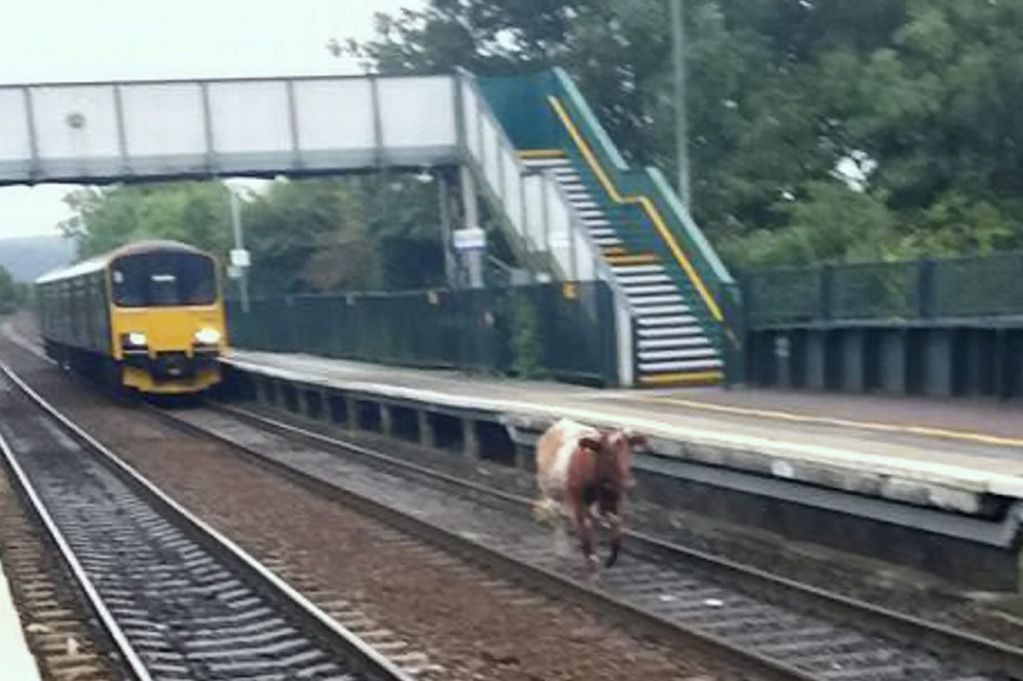
We have cows; we have always had cows! In the olden days we also had donkeys and sometimes goats, but now we are down to great herds of cattle; sometimes the vista is reminiscent of the Great Plains in about 1830 – millions of Bison covered the land and them Injuns just couldn’t keep the numbers down; we have a similar problem.
In a faraway time we had a cattle grid and the Village was surrounded by fences and we lived a tick-free life. The country moved upward and onwards and the fences were liberated for the greater good, and the grid likewise, if it isn’t buried under the tarmac.
So we have cows, and ticks, not to mention irate gardeners whose daisies are added to the bovine methane mix allegedly at the heart of global warming.
We also have Egrets; we have always had Egrets; and very stinky Egret poo; forever; Egrets are the ultimate squatters; you just cannot get rid of them; and they breed like flies; and, just like squatters everywhere, they refuse to work!
For every fifty cows strolling along you might get one Egret lurking about; but they must be off ticks, because these guys are all over the shop!
Ticks like dogs; they will take people, but dogs come first; which is a pity because vets are twice as expensive as doctors; it’s cheaper for your wife to get tick bite fever than for your hound to catch it.
Our fences round the Village are long gone; good old SA Railways and Harbours – an honourable if laid back organization, has been succeeded by Transnet; SAR&H used to keep their fences up; the clowns from Transet, when finally urged into action after numerous interventions, put up puny single strand wire fences, take photos with their cell phones to prove they have actually been on site, and depart; next day, the herd boys cut the fences, and the cows move in.
Then we have trains; regular passenger trains, generally very empty; and car trains, which carry vehicles to the harbour en route overseas; vital to offset the country’s negative balance of payments; and sometimes nondescript trains which are probably just going for a ride.
Our trains have one thing in common; their sirens wail at any opportunity; safety comes first! If they see you walking your dog down the hopefully tick-free road half a mile from the level crossing, you will receive an admonitory screech; just don’t break into a run.
If you have the misfortune to be approaching the crossing in your vehicle, oh my word! All the discordance of Hell shall be poured upon thine ears; conversation comes to a stop until the beast has thundered by, wailing into the sunset.
Egrets are forever, as James Bond might have said if he lived here; but we can lose the cattle and thereby the ticks, if we carry out the cunning plan devised by our leader, an ancient agriculturalist.
Take several drums of molasses, add some salt; at the dead of night, paint the mixture on the railway lines; prepare several bottles of Ship Sherry i.e. have a good sluk and replace with two tots (Imperial) of Vodka. Await the dawn, the ambling herd and the shambling herd boys.
Deprived as they are of proper saltlicks, and entranced by the smell of molasses, the cows with shining eyes will crowd the rails, licking the lovely iron with wild abandon.
Soon an orange monster will appear from the north; the driver will observe with horror platform to platform bovinity, and will hopefully apply brakes in time to prevent wholesale cownage. He will certainly cause the siren to wail and screech.
Meanwhile the herd boys, faced with temptation, will long since have downed the reinforced sherry, and are face down in the long grass, giggling.
A stand-off ensures; cows are just too dumb to be scared of noisy diesel engines; it will be at least an hour, possibly two, before the cows lick the rails clean and move off in search of greenery.
The news will trickle up what passes for a communications network at Transnet; officials will react as usual – stick finger up nose, engage brain, apply what passes for a mind and make a note.
This news will be repeated day after day; the supply chain will begin to buckle; the supply of cars to the docks will dry up; shipping companies will protest vigorously, the Minister will hear about it; eventually the penny will drop; but probably not before a few cows have been executed by train and the odd herd boy passed out of this life with the ultimate smile on his face.
Eventually, Transnet will be stung into action and will put up a proper fence.
One small victory for very local government against the faceless corporate monsters!
Gym card for Christmas from Nick the Knife; plus his personal supervision at the two sessions I have survived so far.
It wasn’t a gift, it was a message!
No unkind words were said, but the implication was loud and clear: you are declining into antiquity with sloth-like enthusiasm, you eat way too much, you are on a mission to exhaust the nation’s alcohol supply, in short, you are growing old disgracefully!
The subtle message: this is not a passenger train, shovel coal or get off!
He would never say such unkind things but he doesn’t have to; I sailed my Laser for the first time in months and I think even the boat felt embarrassed!
So off to gym we go – the building has a large window overlooking the harbour – I was fascinated by the elegant cruise ship coming through the entrance and I envied the guys racing a dinghy in the south-easterly breeze.
This cut no ice with the instructor. I was told to pay attention. My arms ached for days!
Session 2 was about legs. Given that I have an iridium knee and a titanium hip – thanks to sport in a previous millennium – he was a tad concerned about metal parts coming adrift, like a rusty exhaust falling off an old jalopy.
On the way home I was given a lecture on focusing my mind on the individual exercises. Luckily he didn’t catch me staring at the blonde honey on the treadmill!
This blog was actually written about four years ago but nothing has changed….
I survived the Old Geezer Regatta – just! And I only sailed on the Bridge Boat!
Day one of the keelboat event held annually in Algoa Bay passed me by completely, as I was captaining a booze cruise up the Zwartkops River in honour of a varsity student on day six of his extended 21st birthday party. I ignored a call summoning me to a protest meeting. As a confirmed dinghy sailor, I know how to prioritise.
Many casualties later, some time after midnight, my elder son and his evil cell phone recorded me singing that lovely rendition of the famous Scottish song “The Road to the Isles”, the one that starts “Oh my little sister Millie…” He is threatening to upload it to You Tube! I can only sigh about the youth of today.
Day two passed in a blur but I did attend the protest meeting in the evening. In Port Elizabeth, the dinghy guys have to do all the protests, for reasons which will become obvious. Our keelboat people have to pass all sorts of tests and examinations in order to get out of the harbour and sail to the nearest island, but ISAF racing rules are not part of the curriculum.
Of the four protests dealt with that night, three were thrown out because the protestor either didn’t have a protest flag, or forgot to fly it, or didn’t inform the other guy. The fourth one was a request for redress which we resolved using some dubious calculations. Fortunately there were no Optimist skippers present, and those involved staggered back to the bar quite happy with our findings. I managed to get to the grand finale of the 21st birthday celebration in good time.
I got to the harbour on day three (late) to join the Bridge Boat, the good ship Headway, for many decades a celebrated garden gnome in front of the Captain’s house in the Village of Redhouse. When it was finally carted off to the sea, many miles away, a saga all by itself, a number of generations came to stare at the huge lawn which suddenly appeared from under the steel monster with which they had grown up.
Headway was manned by the Captain and the Captain’s Lady, the Aged Judge and his Crew, and me, just along for the ride, or so I thought.
We set off into a light easterly zephyr which didn’t get up to more than about ten knots the whole day, but was sufficient to build up enough of a swell to make the lack of stabilisers on our ship readily apparent, especially for those who had just survived a 21st.
As we staggered across the bay to our station about a third of the way up the windward leg, a small, open boat, manned by a portly chap with a red face, and his assistant who did all the work, was trying to lay the leeward mark inside Barneys, that famous pub on the PE beachfront.
As this regatta included about 40 small keelboats of an average length of less than 30 feet and one giant 65 foot monster that stuck out like a sore thumb, we obviously needed sufficient depth of water for the monster to round the leeward mark. After much argument, the Aged Judge and Portly finally agreed on a spot far enough from the beach to prevent shipwreck and we could get on with the race.
First to start was Class One, which included The Monster, seven Pacers, two J27s, one Farr 38, one L26, a red boat of unknown design and uncertain navigational skills but plenty of enthusiasm, and a boat called Cooking, which was manned by a crew obviously chosen for their uniform rotundity, looking for all the world like a bunch of potjie pots as they struggled across the finish line last in every race – Slow Cooking!
Class One started quite well, although there was not much danger of the “I” Flag being flown. The monster looked very impressive with her blue uniformed crew striking a pose whenever they thought the cameraman was looking their way. I’m sure they would make it into Sports Illustrated if it wasn’t for the fact that they had a funny old geezer in a green shirt standing on the transom, in fact I think they had tied him to the taffrail. His only job appeared to be to raise his middle finger to the other boats if they got too close.
Class Two consisted of several cruising boats who qualified to be there because they knew how to hoist spinnakers, and how to retrieve them from the sea when they cocked up dropping them on to the deck. They treated the start line with due respect and they all managed to cross the line within the time limit.
Class Three – well now, here we have a spectacle which has no parallel in the dinghy world, or in any other sport on the planet.
First of all, let me attempt to describe what a Class Three boat actually looks like. Although they are all different, they do have several things in common:
If it wasn’t for the sails it would be difficult to tell the bow from the stern – they appear to be as broad as they are long, and you have to look at them for quite a long time to detect any headway, and then they get into irons very easily and start going backwards; I’ve seen medieval woodcuts of Noah’s Ark that describe them perfectly;
They all have dirty brown sails;
Because all the young, fit people are sailing in the racing boats, the pressgang has obviously been sent to scour the old age homes and geriatric wards for crew for these vessels;
The skippers have a healthy fear of the start line – when the class flag was hoisted to indicate five minutes to go, the bulk of the fleet was huddled in a fearful group about a mile away, with a few brave ones poking their noses towards the line. Fortunately for them, the Aged Judge ignored the time limit for starting. Mind you, he can be quite a cantankerous old bugger, so he probably forgot about it.
But more of Class Three later. It wasn’t exactly the most exciting racing from a Laser sailor’s point of view, so I slacked off in the cockpit getting over my hangover and watched the Bridge Crew in action.
Now, you can be sure that the only reason that the bridge crew members were not playing an active part in the racing in Class Three is that they are way past their sell by date, verily they were ancient mariners!
The Aged Judge in his day was a top class dinghy sailor, when dinghies were made of wood, and sails of canvas, manned by crews of men and boys, and the racing rules smacked more of piracy than sportsmanship, and family sailing hadn’t been invented and we all went to the pub after the race and the wives stayed at home and made supper!
The Flagman had bad legs which didn’t move very easily, but he did a pretty good job of staying upright with the aid of a stout rope rigged between the mainmast and a cleat on the foredeck.
The Timekeeper had worse legs which didn’t move at all, so he stayed flat on his bum the whole day calling out the time very exactly and very loudly. The Captain of the ship wasn’t officially part of the bridge crew so he confined himself to shouting at boats that came too close to his armour-plated hull. He was quite hoarse by the end of the regatta.The ladies on the boat actually did all the work very professionally and without fuss and their average age was less than 40, give or take a decade or three.
The Captain’s Lady was the perfect hostess and served coffee and Old Brown at just the right moments.
The most exciting part of this race was at the finish for which we have to thank the Aged Judge, who insisted on setting a short finish line at 45° to the wind, which required some quick thinking when a pack of boats arrived together. This is cool for racing boats, but just wait until two or more of the Class Three cranks get there together!
One oke staggered across the finish line, barely missing our anchor chain, with another old codger a boat length to weather. As he was crossing the line, one of the few Class Two boats actually carrying a spinnaker the right way up, bore down on him, on the run, on port, and told him to “piss off, I’m racing!”
As pointed out before, these guys know very little or anything about the racing rules. He couldn’t tack because of the boat to weather, so he bore off wildly round our bow and ran down the side into the on-coming traffic causing at least two boats to take avoiding action. The air was blue!
Eventually, it was time to go home. I sauntered onto the foredeck – to be honest, I lurched across her rolling decks holding on for dear life. There was the Aged Judge with his toe on a black button set in the deck. He explained that the red button was to let the anchor chain down, and the black button was for pulling it up again. But nothing that his toe could do made any impression on the anchor winch.
The Captain arrived and made disparaging remarks about gout-ridden toes, but he couldn’t do any better. Suddenly, I realised why Fate had put me on this boat. I had to pull up the bloody anchor!
There is an art to pulling up anchors in a heaving onshore sea. Stay ashore! After what seemed like hours later, the anchor was secured and I was invited below to partake of some very necessary Old Brown pick-me-up, and was instructed to sit on the chart table seat, which I did. The seat broke, I crashed to the deck, (not spilling a drop, I am proud to say) to the consternation of the Captain. It turned out that the seat was made from an oak desk-top which had belonged to his grandfather. I didn’t feel the time was right to ask which ancestor had owned the anchor winch.
When we finally got back ashore, it was straight into another protest. The same process, an invalid protest but this time accompanied by an impassioned plea by a Class Three skipper against the folly of sailing the Monster on the same course as innocent cruising boats, who were there for the fun and shouldn’t have to put up with these rules which were obviously designed for professional racing and not for fun regattas.
I suppose he did have a point. Can you imagine the uproar if a dinghy race committee decided to sail Flying Dutchmen on the same course as the Optimist fleet? The disparity in size is much the same, but the Optimists would at least know the rules.
I think the answer is to have a separate course for Class Three. It would run like this:
At the Preparatory Signal, last rounds are ordered.
When the Blue Peter comes down, they stagger to the heads to empty their catheters;
The dropping of the Class flag signals a Le Mans start, and they rush off to get their boats off moorings (rush, in this case, is a relative term);
They sail to a mark situated as far away from the main racing area as possible, preferably Bird Island, which they round to port, or starboard, as each skipper understands the terms port and starboard;
They eventually return in time for the prize giving at the end of the regatta.
The Protest Committee would of course be deprived of lots of fun, but I reckon Class Three would grow in size as soon as the danger of real racing was removed.
The last day of the regatta featured a brisk south westerly wind, with a flattish sea. Two races were held and by the time the second got going, it was probably gusting up to 20 knots. This thinned the ranks of Class Three considerably.
The Pacers went like the clappers downwind, when they got the angles right. They seemed to get up the beat quite quickly, given that the mainsail has a tendency to flog itself to death.
My younger son was part of a motley crew of local schoolboys recruited by a brave guy from Durban to sail on his Pacer. They put on the most spectacular series of broaches I have seen for many years, at least six in a row. My son counts himself safe back on the rugby field.
We had the normal fun at the finish with Class Three. Four of them arrived in a group, led by a barge called “Mud Guts” or something similar. She made several attempts to cross the finish line, very narrowly missing us on each occasion. The Captain was jumping up and down and told her to bugger of to Cape Recife and to try again from the pin end.
Meanwhile the other three boats took their time to cross the line. One boat with a very elderly skipper known locally as the Port Captain would be making good progress close-hauled when she would suddenly bear off onto a reach as a senior moment kicked in.
It’s quite difficult to cross a short finish line when you can only claw up to about 65° to the wind, but they eventually finished without doing any damage other than to their reputations. In due course “Mud Guts” came back from Cape Recife and crossed at the pin end, much to the Captain’s relief.
They all went home and we stood by while Portly and his long-suffering crew pulled up the marks and transferred them to us. Then it was anchor chain duty again. I suggested to the Captain that he should mount an old-fashioned capstan in place of his electric winch, so that we can get the Bridge Crew to walk the chain up while the Aged Judge danced a hornpipe on top of the capstan. I’m afraid his reply is not fit for publication!